How to Get Cleaning Clients: Complete Guide (2025)
Struggling to find cleaning clients? This complete guide covers online marketing, local partnerships, and smart tech to keep your schedule full.
November 27, 2025
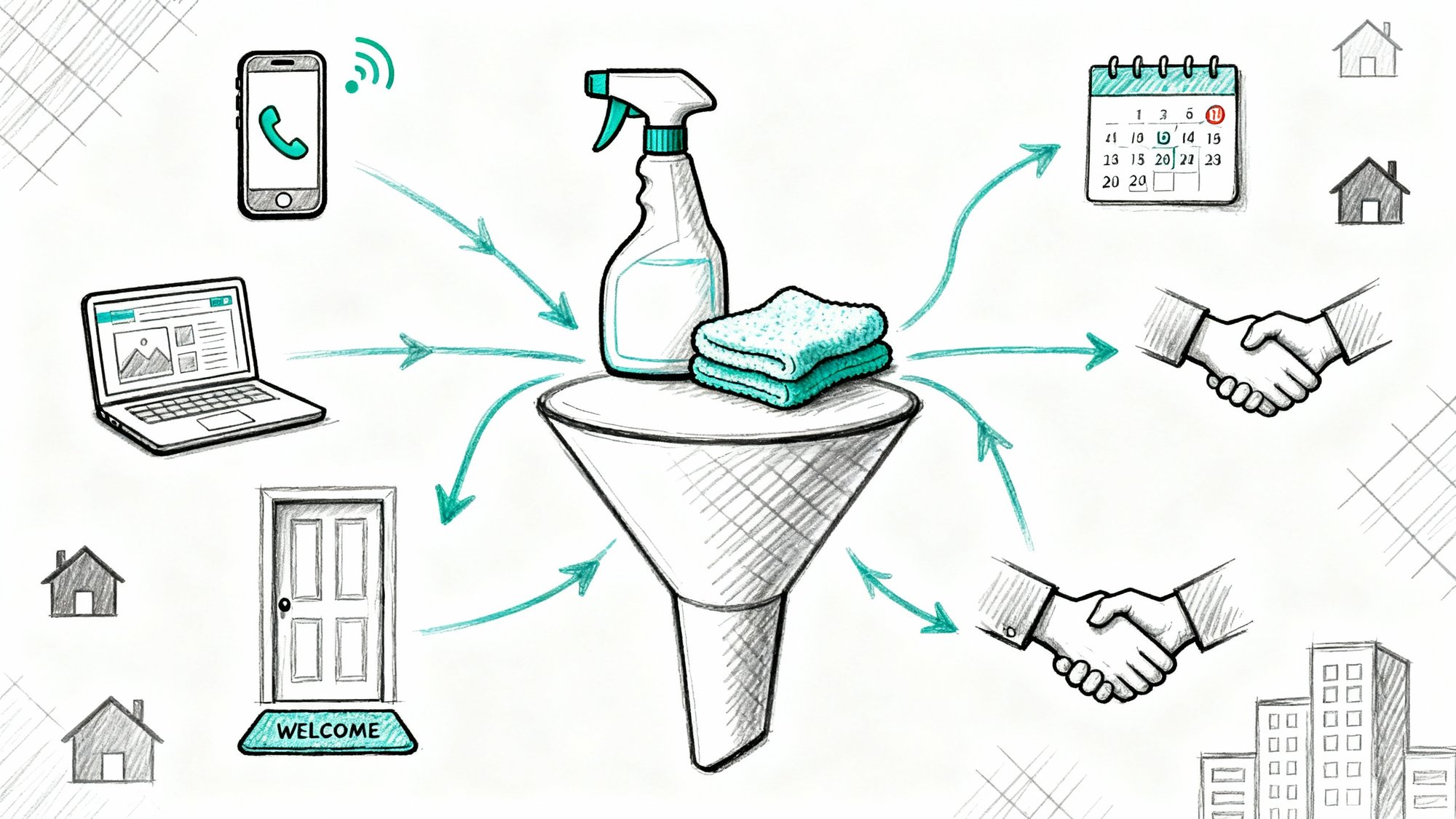
Running a cleaning business means you need two things: the ability to make spaces spotless, and a steady flow of people willing to pay you for it. That second part? It's often harder than the actual cleaning.
You can be the best cleaner in town, but if nobody knows you exist or trusts you enough to let you into their home or office, your calendar stays empty. The cleaning industry is competitive. Your potential clients have options (including doing it themselves). In fact, research shows that 70% of Americans actually enjoy cleaning their own space and find it satisfying. So your marketing needs to convince people that hiring you is worth it.
The good news? Demand for cleaning services remains strong. People and businesses still need help keeping spaces clean. But you need smart strategies to capture that demand and turn inquiries into loyal, paying clients.
This guide walks through proven methods to attract cleaning clients. Some tactics are modern and digital. Others are old-school but still effective. We'll cover everything from building your online presence to using word-of-mouth, and we'll show you how to make sure you never miss an opportunity when someone reaches out.
The competitive advantage in cleaning services: It's not just about being good at cleaning anymore. It's about being discoverable, trustworthy, and responsive when potential clients are ready to hire.

How to Find Your Target Market for Cleaning Services#
Don't try to be everything to everyone. The cleaning market is big, and trying to serve all of it will spread you thin and make your marketing generic.
Start by defining who your ideal clients are. Ask yourself: Who needs my services most? What kind of cleaning jobs can I excel at given my resources and experience?
For example, if you're a solo operator, chasing massive commercial contracts you can't handle makes no sense. You might focus instead on busy dual-income families who need weekly home cleaning. Or perhaps you target landlords who need move-out cleanings between tenants. Focus on a manageable segment where you can deliver excellent results.
Find your niche and unique selling proposition (USP). Once you know your audience, figure out what makes you different. In a sea of cleaning services, your USP is the reason clients choose you over others.
Maybe you specialize in eco-friendly cleaning with non-toxic products. Perhaps you're the expert at pet-friendly cleaning (removing pet hair and odors). Or you offer meticulous post-construction cleanup. Whatever it is, your USP should be something clients care about and something you can deliver consistently.
Some niche examples:
→ Green cleaning: Using only plant-based, eco-friendly products for environmentally conscious homeowners
→ Pet-focused cleaning: Specializing in homes with pets, tackling hair and odor challenges
→ Move-in/move-out specialist: Serving landlords, realtors, and renters who need thorough transition cleans
→ Vacation rental cleaning: Quick turnarounds for Airbnb hosts between guests
Once you pick your niche, weave it into all your marketing. Your website tagline, your Google Business description, your social media posts. Make it clear who you serve and what makes you special.
Pro tip: Research your local competition. If every cleaner in town advertises generic house cleaning, there might be an opening for a specialist. A focused niche can justify premium pricing and make your marketing more effective.
How to Build an Online Presence for Your Cleaning Business#
Almost everyone looking for a cleaning service starts with an online search. About 97% of consumers use the internet to find local businesses, and roughly 65% of people searching for cleaning services begin with a local online search.
Your online presence creates the first impression. Make it count.
Invest in a quality website#
It doesn't need to be expensive or flashy, but it must look professional and be easy to use.
Key elements to include:
• Clear contact information
Your phone number should be prominent on every page (and clickable on mobile). Include an email and contact form. List your service area so people know if you cover their location. These details build trust and help with local SEO.
• Services and credentials
Describe exactly what you offer: standard cleaning, deep cleaning, carpet shampooing, office janitorial, etc. Mention if you're licensed, bonded, and insured. These credentials boost trust significantly when you're asking people to let you into their home or business.
• Real photos and branding
Use actual photos of your team, your equipment, or before-and-after shots. Avoid generic stock images. People hire cleaners based on trust. Research shows 92% of customers care about cleanliness, but they hire based on trust, not just need. Show the humans behind your company. A recognizable logo and consistent colors help you look polished.
• Testimonials and reviews
Feature glowing customer testimonials on your homepage. Social proof is powerful. Nearly 41% of consumers check three or more review sites when researching a local service. People are 88% more likely to choose a business that responds to every review. Highlight real reviews on your site to tip undecided visitors in your favor.
• Easy booking or quotes
Make it simple for clients to take the next step. Enable online appointment booking if possible, or at least offer an easy way to request a quote. Have a "Get a Quote" form where visitors can input their details and receive an estimate. Some clients (especially younger ones) prefer not to call. If you don't offer a quick online option, you might lose them to someone who does.
Finally, ensure your website is mobile-friendly and fast. Over 60% of local searches happen on mobile phones. If your site doesn't work well on smartphones or takes forever to load, visitors will leave. Use responsive design so content adapts to different screen sizes. Test the mobile experience yourself.
Speed matters too. About 53% of users abandon a site that takes more than 3 seconds to load. A smooth web experience signals professionalism and keeps potential clients engaged.

How to Set Up Google Business Profile for Cleaners#
If there's one online marketing step you absolutely must do, it's setting up your Google Business Profile (GBP). This free listing makes you visible in Google Maps and local search results. It's the modern phone book listing and a top source of leads.
When locals search for "house cleaning near me" or "office cleaners in [Your City]," optimizing your GBP helps you show up.
Here's how to maximize your Google Business Profile:
① Claim or create your profile
Visit the Google Business page and claim your listing (or create one if it doesn't exist). Google will verify you, often by mail or phone. Once verified, you control the information.
② Complete every section
Fill out your business name, address, phone, website, and choose the right category (like "House Cleaning Service" or "Commercial Cleaning Service"). Add your service areas, business hours, and any special hours.
③ Write a compelling description
In one or two paragraphs, describe your services and what makes you different. Use keywords naturally but keep it readable. For example: "Locally owned cleaning company offering eco-friendly home cleaning, office janitorial services, and move-out cleans. Fully insured, 100% satisfaction guarantee."
④ Upload photos
Profiles with photos get significantly more engagement. Include your logo and photos of your team at work or cleaned spaces. Show the quality you deliver. Avoid cluttered or dark images.
⑤ Collect Google reviews
Encourage happy clients to leave reviews on your profile. A strong star rating with recent reviews dramatically increases contact rates. Businesses that verify and show credentials are 2X more likely to be considered reputable by customers. Reviews are a huge part of that reputation.
Respond to every review politely, even negative ones. Many prospects read owner responses and judge your customer service by how you handle feedback.
⑥ Keep info up to date
Update your Google profile whenever things change: new services, adjusted hours, special promotions. Post occasional updates or photos. An active profile signals engagement and can rank higher in local searches.
Consider Google Local Services Ads: These paid ads appear at the top of local results with a "Google Guaranteed" badge. You pay per lead (phone call or message) rather than per click. 88% of local service searches on mobile result in a call within 24 hours, meaning these leads are hot. This can be extremely effective in competitive areas.
Nearly 46% of all Google searches have local intent. When someone nearby searches "cleaning service," you want to be front and center. Optimizing your Google Business Profile is one of the most cost-effective marketing moves you can make.
How to Get More Reviews for Your Cleaning Business#
In the cleaning business, trust and reputation are everything. Since you're entering homes and offices, potential clients need to feel confident about you. Customer reviews act like word-of-mouth on steroids, reassuring new customers that others have had great experiences.
Here's how to harness reviews:
• Claim profiles on major review sites
Beyond Google, make sure you're listed on Yelp, Angi (Angie's List), Thumbtack, HomeAdvisor, and other relevant platforms. Even if you don't actively use all these services, people might check them. Ensure your business information is accurate on each site.
• Ask every happy customer for a review
Make it a habit to request feedback after a job is done. Ask when the client is most delighted (right after they see their sparkling space). You can ask in person and follow up with a text or email that includes direct links to your review pages.
Make it easy (the less effort required, the more likely they'll do it). Some businesses offer a small incentive (like 5% off the next service), but be careful to follow platform guidelines. Often, excellent service and a polite request are enough.
• Highlight testimonials on your website and social media
When you get a glowing review or kind note, showcase it (with permission). Create a "Testimonials" page or feature quotes on your homepage. Share positive reviews on Facebook or Instagram, thanking the customer. This promotes your reputation and encourages others to review you too.
• Respond professionally to all reviews
Thank customers for positive reviews. For negative reviews, respond calmly and helpfully. Apologize if you fell short and offer to resolve the issue. Your replies aren't just for the original reviewer. They're for everyone evaluating your company's responsiveness. By addressing feedback gracefully, you can turn a negative review into a positive impression.
• Use reviews to improve
Pay attention to what people praise or criticize. If multiple clients love your reliability, highlight that in marketing. If someone notes you missed a spot, treat it as feedback to tighten quality control. Continuous improvement shows in better reviews over time.
Research shows 41% of people check at least three review sources before deciding on a local service. And 89% of consumers will leave a brand after one poor customer service experience, which could include ignored complaints.
Building a positive reputation and avoiding bad experiences directly impacts your ability to get clients. Make customer service and communication priorities, and good reviews will follow.
Where to Find Cleaning Leads Online#
Beyond your own marketing, you can use existing platforms that connect service businesses with customers. Online marketplaces for cleaning services help clients find pros, read reviews, and request quotes. Being active on these can quickly bring leads, especially when you're building your client base.
| Platform | Best For | Typical Cost |
|---|---|---|
| Thumbtack | Local exposure, building reviews | Pay per lead/quote sent |
| Angi (HomeAdvisor) | Residential cleaning jobs | Per-lead fee or monthly subscription |
| TaskRabbit | One-time or smaller cleaning tasks | Commission on completed jobs |
| Commercial platforms | Office, clinic, school janitorial | Variable network fees |
Tips for using these platforms:
① Create a compelling profile
Fill out all details: services offered, years in business, certifications, what makes you different. Use high-quality images of your work or team to stand out. Many prospects skim profiles quickly, so make yours professional and eye-catching.
② Gather reviews on the platform
Just like Google reviews, accumulate strong ratings on each marketplace. A solid star rating and customer comments greatly increase leads.
③ Be responsive
Many platforms reward fast response times. If a lead comes in, respond within hours or sooner. Customers often contact multiple providers at once. Responding first can win you the job.
④ Watch the fees
These services charge per lead, take a percentage of jobs, or have subscription fees. Some charge 15-30% commission on jobs. Build those costs into your pricing and budget. In some cases, use these to get a few loyal clients, then rely more on referrals to avoid ongoing fees.
⑤ Evaluate ROI
Track which platforms yield profitable clients. If one site sends lots of low-value inquiries, focus elsewhere. If you land a big recurring contract via a platform, it might be worth continued investment.
While marketplaces can bring work, don't become overly dependent on them. They're best as a supplement to your own marketing. The goal is building your client list and reputation so eventually you rely more on direct leads and referrals (which cost far less). But especially early on, listing on multiple platforms increases visibility and can fill your pipeline quickly.
How to Use Social Media to Find Cleaning Clients#
Social media might not seem essential for a cleaning business, but it can be a surprisingly powerful (and free) way to find clients. The key is focusing on local engagement rather than mass popularity.
You don't need millions of followers. You just need the right people in your community to notice you.
Join local Facebook groups
Community groups (city-specific or neighborhood groups) often have people asking for service recommendations. Rather than spamming with ads, be a helpful participant. When someone asks "Can anyone recommend a good house cleaner?", you (or a happy client) can mention your business.
Some groups have dedicated days for local businesses to post offers. Also watch for indirect opportunities: people posting about moving, new parents overwhelmed with chores, etc. Being an active, positive presence can lead to referrals. Don't join a group and immediately start selling. That's like walking into a party handing out business cards (it turns people off).
Instead, contribute advice (like cleaning tips), answer questions, and build a reputation. When someone needs a cleaner, they'll remember the helpful pro in their group.
Use Nextdoor and neighborhood apps
Nextdoor is designed for local networking. Set up a business profile for your service area. Post helpful cleaning tips seasonally and respond to neighbors' posts. Many homeowners ask for recommendations on Nextdoor, and lots of business comes from neighbors recommending you there.
Being active on hyper-local platforms builds trust. People feel like they know you. Nextdoor also offers local business ads if you want to reach more neighbors in your area for a fee.
Share valuable content (not just promotions)
On your Facebook Page or Instagram, don't just post "Call us for cleaning!" repeatedly. Mix in engaging content people enjoy or learn from.
Share a cleaning tip of the week or before-and-after photos (with client permission). Short videos work great (maybe a 20-second time-lapse of transforming a dirty oven). People love satisfying cleaning content. Some businesses tap into ASMR cleaning videos (oddly satisfying clips with pleasant sounds). Creative content can get shared locally, putting your name out there.
Show your personality and team
Social media is great for humanizing your business. Post a photo of your crew ready to tackle the day. Celebrate milestones ("Cleaned our 100th house today!") or share a fun customer anecdote. This makes people feel connected to you and builds trust.
Use visual proof
Platforms like Instagram or Pinterest showcase dramatic before-and-after images. A filthy carpet turned brand-new, or a cluttered room you organized and cleaned. These visuals impress viewers. Before/after posts are inherently shareable, especially if the transformation is dramatic.
Engage with local influencers or businesses
Identify local home bloggers, realtors, or community figures who might give you a shout-out. A realtor on Instagram might let you guest post a cleaning checklist for staging homes. Or sponsor a giveaway ("Free 2-Hour Cleaning Contest (follow and comment to enter)"). The winner gets free service, and many locals learn about you.
The key with social media is consistency and community engagement. Choose platforms where your target clients hang out. For residential cleaners, Facebook and Nextdoor are usually great. Whichever channels you use, keep them updated. Aim for at least one post a week to show you're active. Over time, your social presence can generate a steady flow of clients who feel like they know you.
Cleaning Business Advertising That Actually Works#
While many strategies are low-cost or organic, sometimes paying for advertising can accelerate client acquisition. The key is spending smart (targeting the right people so you're not wasting money).
Online Advertising#
Google Ads (Search)
Running search ads puts your business at the top of results for keywords like "cleaning service [Your City]." You bid on keywords and pay per click. The benefit is reaching customers actively searching for what you offer.
To avoid wasting money, use geo-targeting (show ads only in your service areas) and specific keywords ("apartment move-out cleaning" rather than broad terms). Set a daily budget to control costs. Well-run Google Ads can deliver highly qualified leads.
Facebook & Instagram Ads
Social media ads allow very specific targeting. You can show ads to people in certain ZIP codes, of a certain demographic, or with relevant interests. For example, run a campaign: "Back-to-School Special: 20% off a deep clean for [Town] residents!" targeting women aged 30-50 in your city (likely decision-makers for home cleaning).
Or target new movers (Facebook has a filter for people who recently moved) since they might need a move-in clean. Monitor your ad results and cost per lead. Start with a small budget to test messages.
Local Service Directory ads
Platforms like Angi or Yelp offer paid options to boost your listing above others. These can be pricey, so test carefully. In large metros with heavy competition, paying for a featured spot for a couple months could jump-start customer flow.
Retargeting ads
If someone visits your website but doesn't contact you, retargeting shows them follow-up ads while they browse other sites. This keeps you top-of-mind and can nudge them to convert. Retargeting focuses on warm leads who already showed interest.
Niche advertising
Get creative with things like podcast ads or local radio. About one-third of Americans listen to podcasts, and host-read ads have a 71% recall rate. Local home improvement or community talk podcasts might be open to a cleaning sponsor. The cost can be modest (even around $12 per 1,000 listeners in some cases). Pick podcasts with local listeners if your service area is limited.
Offline Advertising#
Flyers and direct mail
Old-school but still effective. Design a clean, easy-to-read flyer highlighting your services and contact info. Include an offer ("$30 off your first cleaning"). Distribute door-to-door in target neighborhoods or mail postcards to certain ZIP codes.
Focus on areas with high need (new housing developments, high-income areas for maid service, or rental-heavy areas for move-out cleaning). Customize your message to the audience. For busy professionals: "No time to clean? Come home to a spotless house!" For businesses: "Keep offices immaculate and impress clients."
Vehicle advertising
If you have a company car, get it decaled or wrapped with your logo and phone number. A car magnet turns your vehicle into a rolling billboard. People will notice "there's a cleaning service in town." Just ensure your driving represents your brand well.
Local events and sponsorships
Sponsor neighborhood events, charity runs, or school events. Setting up a booth at a home & garden show where you give away fridge magnet calendars can generate leads. Or sponsor the cleaning of a town park after a festival (with credit given to your company). These build awareness and networking.
Networking with local businesses
Print professional business cards and brochures and visit local businesses. Drop by real estate offices (offering move-in/out cleaning) or property management firms (for rental cleanings). This face-to-face networking is often forgotten in the digital age, but many small business owners love connecting locally.
When advertising, track your results. Ask callers how they heard about you, use unique promo codes, or use separate phone numbers for different campaigns. This helps you learn what works so you can allocate budget wisely.
How to Use Promotions to Attract Cleaning Clients#
Sometimes people just need an extra reason to choose your cleaning service. Well-crafted promotions and special offers provide that push and help convert prospects into paying clients.
"New Customer" discounts
Attract first-timers with a deal on initial service. For example, "20% off your first cleaning" or "$50 off your first deep clean." This lowers the risk for someone to try you out. Once they experience your quality, they'll stick for regular-price service.
Make sure to still deliver top-notch work (don't cut corners because it's discounted). Offering 20-50% off the first service is typical, but set the discount at a level that still covers costs.
Bundled packages
Encourage customers to book more by bundling services. For instance, "Buy 5 bi-weekly cleanings, get the 6th free" locks in a recurring client. Or offer a discounted rate if they commit to a monthly plan.
You could also bundle additional services: "Add window cleaning or fridge cleaning and get 30% off that add-on." The idea is increasing total booking value while providing extra value clients appreciate.
Seasonal and event-based promotions
Tap into times when people are likely to need cleaning. Promote a "Spring Refresh Package" each April with a slight discount or bonus. Moving season (summer) might warrant a special for move-in/out cleanings. Align offers with holidays: "Book a deep clean before Thanksgiving (10% off if booked by Nov 15)."
Some cultures tie cleaning to holidays. Demonstrating awareness with promotions like "Diwali Cleaning Special: 15% off" can make you stand out to those communities and show you understand their needs.
"Refer a Friend" incentives
Word-of-mouth is huge for cleaning businesses. To stimulate it, offer something to clients who send new business. For instance, "Get $25 off your next cleaning for every new client you refer." The new client could also get a discount. People are motivated to refer when there's a reward.
Loyalty rewards
Reward repeat customers. Consider a simple loyalty program: after 10 cleanings, the 11th is 50% off. Even a small gesture like a $20 gift card on their one-year service anniversary can wow a client. These touches improve retention, and retained clients mean stable income (and more referrals).
Creative reasons to clean
Sometimes people aren't actively thinking about hiring a cleaner. You can plant the idea with clever marketing. Promote cleaning as a gift: "Give Mom the gift of a clean house for Mother's Day (25% off gift certificates)!" Many people struggle with gift ideas. Presenting a cleaning gift card brings in new clients (the recipients).
Other angles: "New baby coming? Treat the parents-to-be to a home cleaning" or "Schedule a cleaning as a Valentine's surprise." By framing cleaning as a treat or solution for specific moments, you create new demand.
When running promotions, advertise them clearly and note any conditions (expiration date, "new clients only" if applicable). Promotions create urgency which can push fence-sitters to convert. But be careful not to train customers to only buy when discounted. Continue emphasizing service excellence and unique benefits in all marketing.
How to Get Referrals from Local Business Partnerships#
One of the most effective client-getting methods is strategic partnerships. By teaming up with businesses that serve the same customers (but aren't competitors), you both can refer clients to each other. It's a win-win that yields high-quality leads.
Think about who interacts with your potential clients around the time they might need cleaning:
Real estate agents and property managers
Realtors constantly deal with buying/selling homes (prime time for cleaning needs). Reach out to local real estate offices and offer your services for their listings: "I can make your listed homes sparkle for showings or handle post-sale cleanups."
In return, agents can refer home buyers or sellers to you. Property managers for rentals frequently need move-out/move-in cleanings. One good relationship with a realtor or property manager can lead to dozens of referrals. Consider offering a small commission or referral fee for each job they send.
Contractors and home service providers
Think of other professionals who enter homes: painters, carpet installers, plumbers, HVAC technicians, pest control, electricians. You can form a mutual referral network. A painter finishing a job can recommend you for final cleanup. In turn, if you're cleaning a house and notice they need carpet work, you recommend your partner.
There's no competition in these referrals because you each have your specialty. Clients appreciate trusted recommendations. Attend local business networking events or join a chamber of commerce to meet home service businesses and suggest exchanging referrals.
Interior designers and home organizers
People who hire decorators or professional organizers often fit the profile for cleaning services (they care about their home and have disposable income). Network with local designers. When they finish revamping a space, a deep clean is the perfect finishing touch. They refer you clients, and you refer clients who need help with decluttering.
Businesses with client spaces
Consider gyms, daycare centers, salons, co-working offices. They all need cleaning and engage with the public regularly. A hair salon might chat with a client who mentions needing house cleaning and could recommend you. You could do a free trial cleaning for a local small business in exchange for them leaving your brochures at their front desk.
Event planners and catering companies
These folks deal with events that often require cleanup crews (before or after). If you offer event-cleanup services, let event planners know. They can fold your service into their offerings or recommend you to clients who host events.
When forming partnerships, maintain the relationship. Send thank-you notes or small gifts to partners who send business. And deliver excellent service to any referral they send. If you do great work for a referred client, it makes the referrer look good too, and they'll continue recommending you. By integrating into an ecosystem of related businesses, you create a referral engine that consistently feeds you clients without heavy ad spend.
How to Get Referrals from Existing Cleaning Clients#
Your existing customers can be absolute gold for new clients. Someone happy with your service is often very willing to spread the word, but they may need encouragement or a reminder.
In the cleaning industry, word-of-mouth is arguably the most powerful marketing because trust is so important. People ask friends and family if they know a good cleaner. You want to be that name everyone passes around.
Why referrals matter more than anything: In a business where you enter people's homes, trust is everything. A referral from a friend isn't just a lead, it's pre-sold trust.
Provide unforgettable service
First and foremost, do an amazing job. Reliability, quality, and professionalism lead to satisfied customers who want to tell others. Little touches like leaving a thank-you note or doing a small extra task occasionally can create enthusiastic fans who become your unofficial sales reps.
Ask for referrals directly
Don't be shy. Let clients know you're looking to grow. At the end of a job: "I'm so glad you're happy with the cleaning! If you have friends or neighbors who could use help, I'd be thrilled if you passed on my card." Sometimes that simple prompt gets them thinking of someone. Make it a casual request when you've just earned praise.
Set up a formal referral program
Reward referrals to boost participation. Create a program and tell all customers about it. For example: "For each new client you refer who books a service, you get 20% off your next cleaning (and they get 10% off their first)."
Or use non-monetary rewards like a free extra service or gift cards. Print this offer on invoices, mention it in follow-up emails, or include extra business cards with a note "Share with a friend and get rewarded." Make the referral process easy. Track referrals diligently so you honor rewards. A well-run referral program can significantly lower customer acquisition cost.
Use the power of networks
Some services grow massively through community referrals. If you get an "in" with a particular community (church, workplace, neighborhood), you could soon have many members as clients because they all talk. Identify if current clients are members of larger groups. If appropriate, ask if they could spread the word. Perhaps offer a special group rate if five neighbors all sign up around the same time (making your routing more efficient too).
Capture testimonials and share referral stories
When someone refers you (with permission), share the love. Post on social media: "Huge thank-you to our client Jane! She referred her neighbor this week. It means the world when happy customers tell their friends." This publicly acknowledges the referrer (people like recognition) and subtly encourages others to do the same.
Be referral-worthy in every interaction
Show up on time, be friendly, handle issues with grace. If someone refers you to their friend and you disappoint, it makes the referrer look bad. Protect referrers' trust by treating referred clients like VIPs. Always thank the referrer after the fact with a note or discount.
Residential cleaning thrives on referrals because it's an intimate service (someone coming into your home). People heavily rely on recommendations for that. Many families choose a cleaner a friend vouched for over one found online, simply because of personal trust.
Customer referrals tend to be higher-quality leads. They convert better and stick around longer because trust is pre-established. They already have a positive expectation ("I heard you did great for my friend"), which is a wonderful starting point.
Make actively cultivating referrals a core strategy. It's the cheapest and most authentic way to get new clients. Each happy customer isn't just one-time revenue. They're a bridge to many more if you guide them to be.
Why Fast Response Times Win More Cleaning Clients#
Imagine running expensive ads or getting a referral, and then you miss the call or let the email sit for days. That potential client is likely gone forever.
In the cleaning business, responsiveness is often the secret that converts leads to clients. People expect quick answers. If you don't provide them, your competitor will.
The responsiveness advantage: Studies show 89% of customers will drop a company after one bad customer service experience. An unanswered call is a bad experience.

Always answer the phone (or call back ASAP)
Many cleaning businesses are owner-operated, meaning you're out in the field cleaning. It's tough to juggle, but you cannot let calls routinely go to voicemail during business hours.
Among local service seekers, 88% will contact a business and often go with whoever responds first.
If someone calls about cleaning, they're probably calling a few providers. The first to actually speak with them helpfully often wins the job.
Consider solutions to ensure calls are answered. You might hire a part-time receptionist or use a call answering service. Nowadays, there are also AI-driven receptionist services that can pick up, provide information, and even schedule appointments 24/7.
For example, Eden's AI phone assistant is built specifically for service businesses like cleaning companies. It answers calls around the clock, speaks naturally with callers, captures lead information, and can book appointments into your calendar. Cleaning companies lose valuable leads when calls go unanswered while they're on job sites. An AI receptionist ensures every inquiry is handled professionally, even at 8pm or on weekends.
The goal is simple: when a prospect dials your number, they reach a friendly voice immediately, not a voicemail. Every missed call is money walking out the door.
Respond fast to online inquiries
If you receive emails, form submissions, or messages through social media, treat them with urgency. Ideally, reply within the hour (same-day response at minimum). Research shows companies that responded to leads within an hour were 7 times more likely to qualify the lead than those who waited 24 hours.
Even if you don't have a full answer yet, a quick "Got your request, we'll get back to you with a quote in a couple hours!" buys goodwill. Set up notifications on your phone for new messages so you see them right away.
Use technology to assist
Tools can help you respond quickly. Have email templates ready for common inquiries. Use a scheduling app so when someone calls, you can immediately offer booking options instead of saying "I'll check and call you back."
If your volume is high, consider a CRM or lead management system that pings you until a new lead is responded to. The key is not letting anyone slip through the cracks.
Extend your availability if possible
Many potential clients call after their own work hours (6-7pm) or on weekends. If you only respond 9-5 Mon-Fri, you'll miss these folks. Try to at least check messages in the evening and return urgent calls.
Better yet, have a way to handle off-hours inquiries. This could be rotating phone duty with a team member or using an after-hours answering service. For instance, Eden's AI receptionist can answer calls at 8pm and book an appointment for next week while you're off the clock. The more seamlessly you can be available around the clock, the more leads you'll capture that others miss.
Follow up diligently
If someone got a quote but didn't schedule, follow up. A polite email after a few days: "Just checking if you have questions about the cleaning quote. Our schedule is filling up, so let me know if you'd like to reserve a slot!" Many people appreciate the reminder. They might have gotten busy. A follow-up brings you back to top of mind. Just be helpful in tone, not pushy.
Professional phone etiquette
When you answer or return calls, make it count. Be friendly, listen more than you talk initially, and gather the prospect's needs. Then confidently explain how you can help and ask for the booking.
Sometimes small businesses forget to actually close. Don't just say "I'll send you info." If you can book on that call, do it: "It sounds like we should do a deep clean of your 3-bed home. I have an opening Tuesday afternoon (would that work?)" This proactive approach turns inquiries into appointments on the spot.
Consider this scenario: A homeowner searches online for "cleaning service near me." They find three companies. They call the first: no answer, so they hang up. Call the second: voicemail (they leave a message). Call the third: someone answers live on the second ring, answers questions warmly, and sets up a quote visit the next day.
Who gets the business? Of course, the one who answered and engaged. In fact, many people won't even leave voicemail. They'll just try the next company.
If you can't personally handle the influx of calls and messages, invest in support. It will pay for itself with the clients saved. Speed and attentiveness set you apart. Many service businesses have mediocre communication. If you excel here, it becomes a competitive advantage clients will mention ("She always picks up and is so on top of things!").
In an era of instant gratification, the cleaner who responds fastest (and professionally) often cleans up the market.
How to Keep Cleaning Clients Long-Term#
Getting clients is step one. Keeping them is step two, and equally important. The most valuable clients are repeat ones: homeowners who book you every two weeks for years, or businesses that stick with your janitorial contract for decades.
Loyal clients provide steady income, refer new customers, and reduce marketing needs. Here's how to turn new clients into long-term fans:
Consistently high-quality work
This is the cornerstone. Always do a thorough job. Develop checklists for cleanings to ensure nothing is missed (maybe share a copy with clients so they see what's covered). Pay attention to details that wow people: perfect vacuum lines on carpet, shiny faucets with no water spots, a light air freshener scent when you finish.
If quality ever slips, loyal clients will forgive a hiccup or two, but don't take them for granted. They have options and will notice if you start cutting corners. Treat every session with the same care as the first.
Build personal rapport
Get to know clients and their preferences. If Mrs. Smith likes pillows arranged a certain way, do it that way each time. If a commercial client's alarm needs special procedure, memorize it. These personal touches make clients feel valued.
Greet them by name, remember small details they mention (like kids' names), and ask about them later. This level of personal care is something an independent cleaning business can deliver better than a big franchise. It deepens loyalty because they see you almost as a friend rather than just a vendor.
Solicit feedback and act on it
Periodically check in: "Are you happy with how everything is being cleaned? Is there anything we could do differently?" Clients appreciate the chance to give input. If they offer a critique, thank them and adapt. For example, if they say "the last cleaner forgot to dust the top of the bookshelf," make a note and ensure it's done next time (and let them know).
If they love something ("I really like that you fold the towels so neatly!"), reinforce that in your routine. Some businesses use a simple feedback survey or leave comment cards occasionally.
Reliability and communication
Show up on time, every time. Clients need to trust their cleaner will be there as scheduled (or that if you reschedule, it's properly communicated). If an emergency comes up, notify the client ASAP and offer a makeup time or discount for inconvenience.
Set clear expectations. For example, if certain tasks aren't included in standard cleaning (like dishes or laundry), communicate that upfront to avoid misunderstandings. Good communication prevents small issues from eroding the relationship.
Offer maintenance plans or recurring scheduling
Make it easy for clients to stick with you by offering recurring service plans. After the first clean, suggest: "Your home stays much more consistently clean if we come every two weeks. I can reserve a spot for you on alternate Fridays if you're interested."
Many will agree because you've made it convenient and they like the result. For commercial clients, propose a contract for X times per week at a set rate. Maybe give a slight discount for committing to a 6- or 12-month term. Recurring clients are your bread and butter.
Implement loyalty programs or perks for long-term clients
Formally appreciate your long-timers. It could be as simple as a handwritten thank-you and small gift card on their service anniversary. Some companies do an annual "Client Appreciation Day" where everyone gets a little something (branded calendar, discount code, etc.). Even a personal holiday card can leave a warm impression. Happy, appreciated clients stick around.
Solve problems proactively
Despite best efforts, mistakes occasionally happen. A lamp gets knocked over, an area was missed, an employee had a bad day. When a client brings a problem to your attention, address it immediately and make it right.
Apologize sincerely, fix the issue (re-clean, pay for damage), and perhaps offer a small extra ("We'll comp this cleaning" or "We've added a complimentary service next visit"). How you handle errors can actually strengthen trust if done well. They'll know that even if something goes wrong, you'll take care of them. If problems are ignored or handled poorly, you'll lose that client and any referrals.
It costs 5-7 times more to acquire a new customer than to retain an existing one. While you should always be adding new clients, you also want a solid core of repeat clients providing recurring revenue.
Over time, if you do great work and nurture relationships, you might reach a point where your schedule is full just from loyal repeats, and new inquiries go on a waitlist. That's a fantastic place to be, fueled by retention and referrals.
Getting clients is step one, keeping them is step two. Both are essential for sustainable growth. By following through on promises, maintaining quality, and making customers feel valued, you'll not only keep their business but turn them into ambassadors who help your cleaning business flourish for years.
Common Questions About Getting Cleaning Clients#
How much should I charge for cleaning services?#
Pricing varies by location, service type, and experience. For residential cleaning, many companies charge $25-$50 per hour or $100-$200 for a standard home clean. Commercial janitorial services often use square footage pricing ($0.05-$0.20 per square foot).
Research your local market rates by checking competitor pricing and asking what clients in your area typically pay. Factor in your costs (supplies, labor, travel, insurance) and desired profit margin. Don't underprice yourself just to compete. Instead, justify your rates with quality service and unique value.
What's the best way to get my first cleaning client?#
Start with your immediate network. Tell friends, family, neighbors, and former coworkers that you're starting a cleaning business. Offer a special introductory rate for your first few clients in exchange for honest feedback and reviews.
Join local Facebook groups and Nextdoor, and offer to help when people ask for cleaner recommendations. Create a simple Google Business Profile and list on a marketplace like Thumbtack. Your first client often comes from someone who knows you or can verify you're trustworthy through mutual connections.
Should I focus on residential or commercial cleaning?#
It depends on your resources and preferences. Residential cleaning typically has lower startup costs (basic supplies and tools), more flexibility in scheduling, and builds personal client relationships. But it can be physically demanding and requires trust-building since you're in people's homes.
Commercial cleaning often means larger contracts with stable income, evening/weekend work (less conflict with other jobs), and less personal interaction. But it requires more equipment, staff, and sometimes bonding/insurance requirements.
Many cleaners start residential to build cash flow and reputation, then expand to commercial as they grow. Choose based on what you enjoy and what your local market needs most.
How do I handle customer complaints?#
Address complaints immediately and professionally. Listen without getting defensive, apologize sincerely for the issue, and ask how you can make it right. Offer to re-clean the area, provide a discount, or add a complimentary service.
Document the complaint and your resolution so you can prevent similar issues. Follow up after resolving it to ensure the client is satisfied. Most clients just want to be heard and see that you care about quality. How you handle problems often matters more than the problem itself.
Do I need insurance for a cleaning business?#
Yes, absolutely. At minimum, get general liability insurance to cover property damage or injuries that might occur while you're working. If you have employees, you'll need workers' compensation insurance (required in most states).
Consider bonding (protects clients if you or an employee steals) and commercial auto insurance if using vehicles for business. Insurance costs vary but typically run $500-$2,000 annually for basic coverage. It's essential for client trust (many won't hire unbonded/uninsured cleaners) and protects your business from devastating lawsuits.
How can I compete with larger cleaning companies?#
Focus on personalized service and local relationships. Big companies can't match the personal attention a small operator provides. Get to know your clients, remember their preferences, and be flexible with their needs.
Emphasize your unique selling proposition (eco-friendly products, pet expertise, same cleaner every time). Be extremely responsive (answer calls quickly, show up on time). Build strong online reviews that showcase your reliability. Offer specialized services larger companies don't.
Many clients prefer supporting local small businesses and will pay slightly more for better service and personal connection. Learn how AI phone assistants can help you compete with big companies' call handling capabilities.
What's the fastest way to grow my client base?#
Combine three high-impact strategies simultaneously:
First, optimize your Google Business Profile and get 5-10 five-star reviews quickly (ask every happy client). This makes you visible when locals search for cleaning services.
Second, join 3-5 local Facebook groups and Nextdoor, and actively participate (not just advertise). Be helpful, answer questions, and build relationships. Referrals from these communities convert extremely well.
Third, partner with a real estate agent or property manager who can send you move-out cleaning jobs. One good partner relationship can generate steady leads.
Don't try everything at once. Focus on these three for 30 days and track results. Once you have consistent leads, expand to other strategies from this guide. Consider using lead qualification tools to prioritize your best prospects.
How important is online marketing for cleaning businesses?#
Extremely important. 97% of consumers use the internet to find local businesses, and 88% of local searches result in contact within 24 hours.
If you're not visible online (Google, social media, review sites), you're missing the vast majority of potential clients who search "cleaning service near me." At minimum, you need a Google Business Profile, basic website, and positive online reviews.
You don't need a huge budget or technical skills. Start with free tools (Google Business, Facebook Page, Nextdoor), be responsive when people contact you, and consistently ask happy clients for reviews. This foundation costs nothing but time and will generate more leads than traditional methods alone. Explore cleaning business software options to streamline your marketing and operations.
Ready to Transform YourCustomer Experience?
Join hundreds of businesses using Eden AI to handle calls, book appointments, and provide 24/7 customer support.