How to Start an After-Hours Plumbing Service (2026)
Learn how to start a successful after hours plumbing service that captures every 3 AM call. Licensing, pricing, systems, and scaling covered.
December 19, 2025
When a pipe bursts at 2 AM, homeowners don't have time to wait. They're frantically searching for "emergency plumber near me" while water floods their basement. Here's the reality: they'll call the first business that actually picks up the phone.
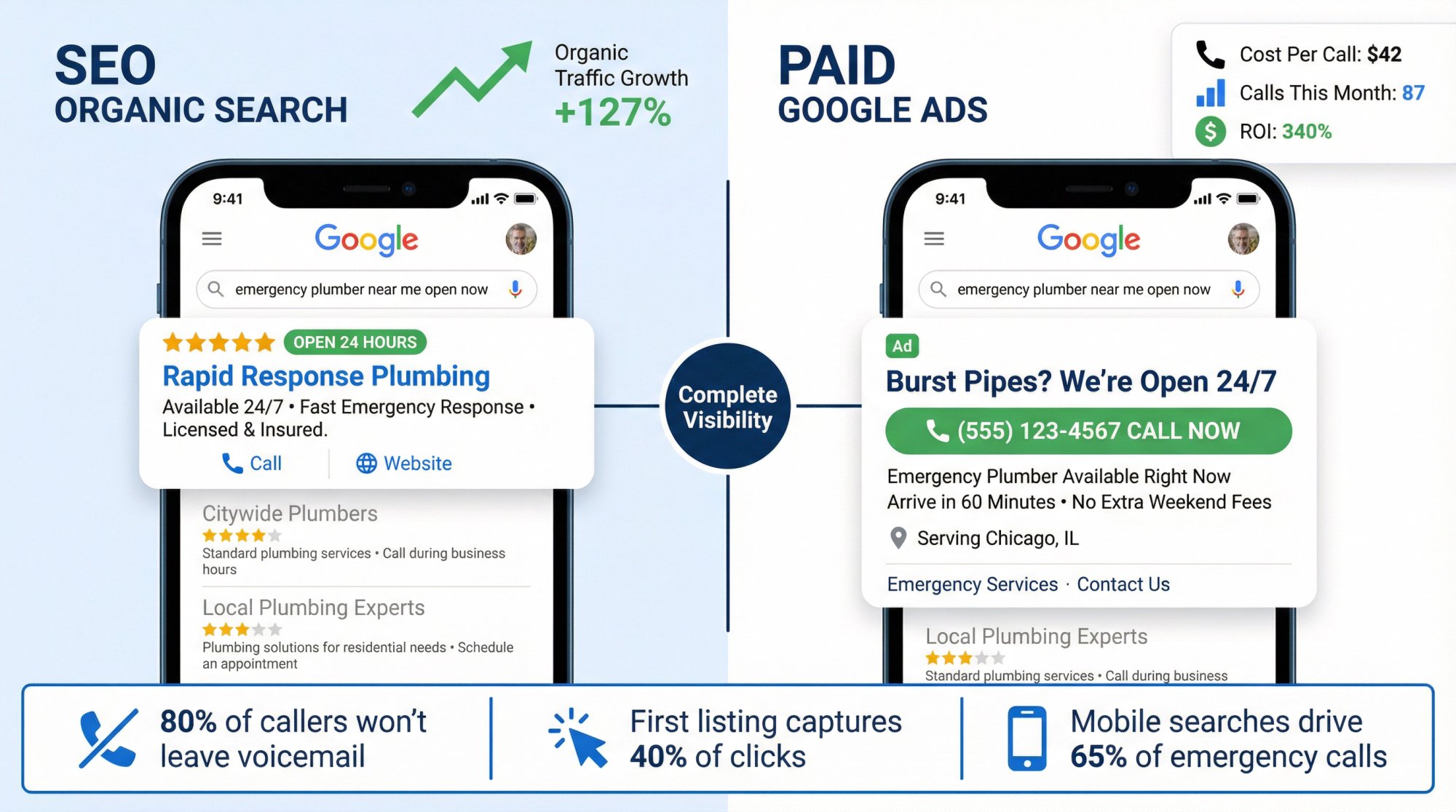
Most callers won't leave voicemail. Research shows that roughly 80% of people hang up when they reach an automated message. That's not a lead you can call back later. That's revenue walking straight to your competitor.
Starting an after-hours plumbing service isn't just about working odd hours. It's about building systems that capture those panicked 3 AM calls, deliver exceptional emergency service, and turn crisis moments into long-term customer relationships. The opportunity is massive because most plumbing businesses claim 24/7 service but don't actually deliver it.
This guide walks through everything you need to launch and scale a thriving after-hours plumbing operation, from licensing and pricing to call handling and sustainable growth.
How to Research Your Local Plumbing Market#
Not every market needs another emergency plumber. Some are saturated. Others are wide open.
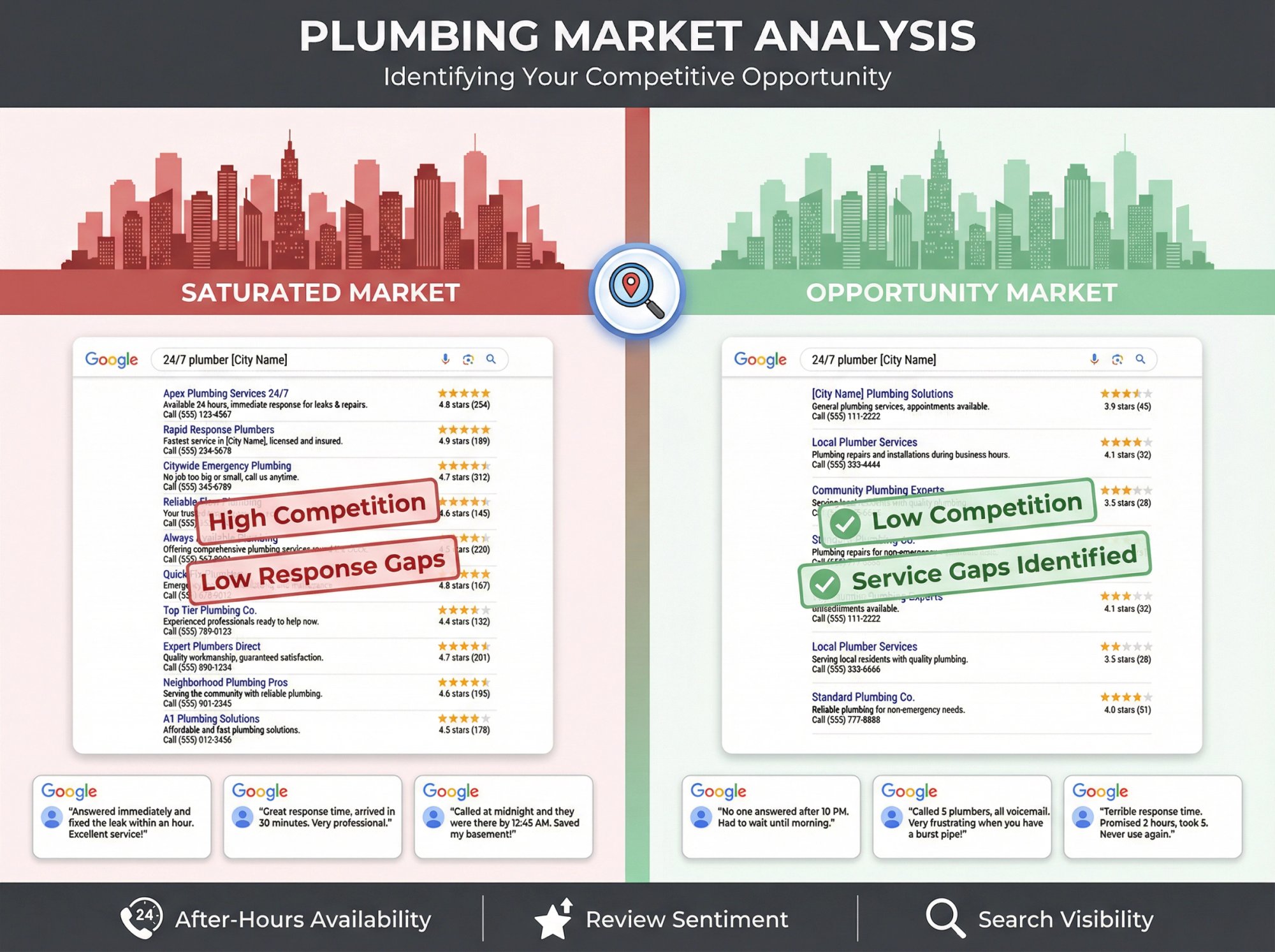
Start by analyzing your local competition. Search "24/7 plumber [your city]" and "emergency plumber near me" to see who appears. Then dig deeper. How many actually answer calls after midnight? Check their Google reviews for complaints about slow response times or unanswered calls. These gaps represent your opportunity.
Pay attention to what customers are saying. If multiple reviews mention "couldn't reach anyone" or "had to call five plumbers before someone answered," that's a clear signal. Your market needs reliable after-hours coverage.
Identify your target customers and their urgent needs. Are you in an area with aging infrastructure where pipe bursts are common? Do extreme winters create regular water heater emergencies? Regions with older housing stock or harsh climates tend to generate consistent emergency plumbing demand.
Think about who needs you most:
Homeowners dealing with burst pipes, sewer backups, and water heater failures
Property managers responsible for multiple buildings (they can't wait until Monday morning)
Small business owners who need immediate fixes to avoid closing their doors
Landlords who face tenant emergencies at all hours
Define your unique value proposition. "24/7 availability" is a strong differentiator by itself since many shops can't sustain true round-the-clock operations. But you can get more specific. Maybe you specialize in rapid response (guaranteed arrival within 60 minutes) or focus on specific emergency services like after-hours drain clearing.
Some successful plumbing companies brand themselves as "24/7 Emergency Plumbing Specialists" right in their business name. This immediately communicates what makes you different. Pick your niche and own it from day one.
What Licenses and Insurance Do Plumbers Need?#
Operating without proper credentials isn't just illegal. It's dangerous for you and your customers.
Licensing requirements vary by state and locality, but they're always non-negotiable. Most states require completing years of apprenticeship or technical training plus passing an exam to become a journeyman or master plumber. The process typically takes two to five years, and you'll need to pay licensing fees.
If you're already licensed to work for someone else, verify whether you need an additional contractor's license to run your own business. Some jurisdictions require a separate contractor license for jobs over certain dollar amounts. Your local licensing board can clarify exactly what you need.
Don't cut corners. Customers check credentials, especially for emergency services where they're letting strangers into their home at odd hours.
Insurance is equally critical. Emergency plumbing involves high-stakes situations: flooding that could cause tens of thousands in damage, gas leaks that create fire hazards, or injuries from working in tight spaces.
At minimum, you need:
| Insurance Type | What It Covers | Why You Need It |
|---|---|---|
| General Liability | Accidental property damage or injuries on the job | Often the first thing commercial clients ask for |
| Workers' Compensation | Medical expenses if employees get hurt | Legally required in most states when you hire |
| Commercial Auto | Your work vehicle for business use | Personal auto policies won't cover business use |
| Bonding | Client protection against incomplete work | Required in many areas or by certain clients |
These policies protect both your finances and your reputation. One uninsured accident could bankrupt a new business before you even get started.
How to Write a 24/7 Plumbing Business Plan#
Too many plumbers jump in with tools and a truck but no actual plan. The business side is what separates successful companies from those that struggle.
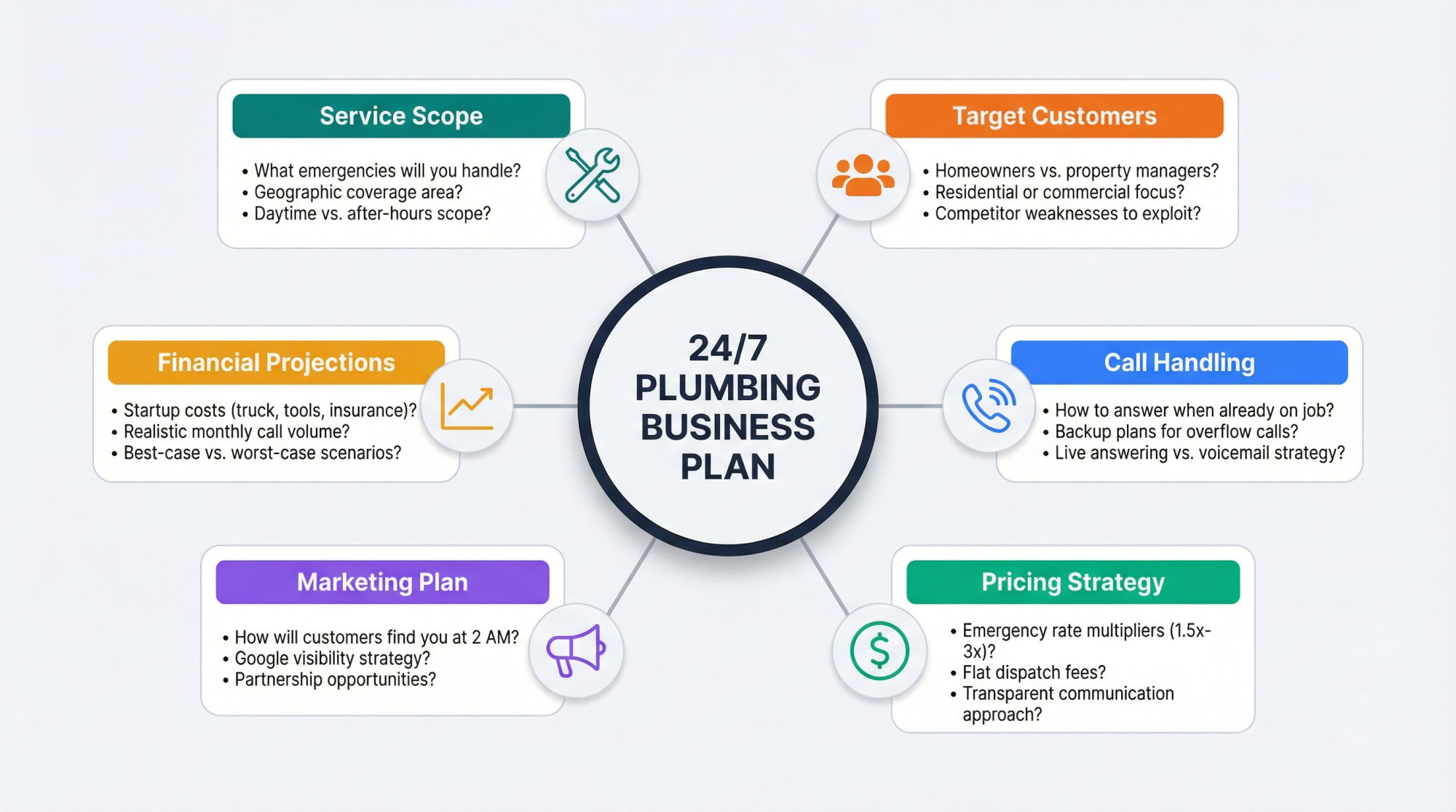
Your plan doesn't need to be 50 pages long. But it should address how you'll run a 24/7 service sustainably:
What Services Will You Offer After Hours?#
Define exactly what you'll offer during after-hours calls. Will you handle all types of plumbing emergencies or focus on specific issues like leak repairs and drain clears? What geographic area can you realistically serve at 3 AM?
Be specific about scope. Common emergency services include leak repairs, drain cleaning, water heater fixes, and sewer backups. You might decide that complex installations wait until daytime but anything involving active water damage or safety hazards gets immediate response.
How to Identify Your Target Customers#
Document who your ideal customers are and what your research revealed about competitors. If customers complain that "ABC Plumbing never answers after 10 PM," you can emphasize truly 24/7 availability in your marketing.
Understanding competitor weaknesses helps you spot opportunities to differentiate. Maybe everyone in your area charges similar rates but has terrible response times. Or perhaps they all use voicemail instead of live answering. These gaps become your advantages.
How to Handle 3 AM Calls When You're Already Busy#
How will you handle a 3 AM call when you're already on another job? This is the question that separates real 24/7 businesses from pretenders.
Early on, you might be the only person taking calls and doing work. That's fine. But you need backup plans for overflow situations, sick days, or when you're physically unable to handle more calls.
Options include partnering with another plumber for mutual coverage, using an answering service to triage and schedule, or eventually hiring staff to create on-call rotations. Document your approach now before you're scrambling at midnight.
How to Price Emergency Plumbing Services#
Emergency work costs more than scheduled appointments. Customers expect this. But you need a clear structure that covers your costs while remaining competitive.
Outline your rate tiers:
-
Standard daytime rates
-
After-hours rates (typically 1.5x normal)
-
Weekend rates (often 2x normal)
-
Holiday rates (sometimes 3x normal)
Include any flat fees like emergency dispatch charges. The timing of an emergency significantly impacts pricing, and being transparent about this upfront builds trust.
How to Market a 24/7 Plumbing Business#
How will panicked customers find you at 2 AM? Map out your strategy for online visibility, particularly Google search and local directories. Plan for how you'll emphasize 24/7 availability in all branding.
Also consider partnerships with related businesses. Restoration companies often need emergency plumbers. Property managers need reliable on-call contractors. These relationships can provide steady work.
How to Project Startup Costs and Revenue#
Estimate startup costs: vehicle, tools, insurance, licensing, website, phone systems. Then project realistic monthly expenses and revenue.
Be conservative. How many emergency calls can you realistically expect per week? What's the average job value? Map out best-case and worst-case scenarios to ensure you have enough runway to survive the early months.
Business Reality: One big after-hours job can bring in several thousand dollars. But you need to survive between those jobs.
What Equipment Do Emergency Plumbers Need?#
With your plan in place, start building the practical foundation:
How to Stock Your Plumbing Service Vehicle#
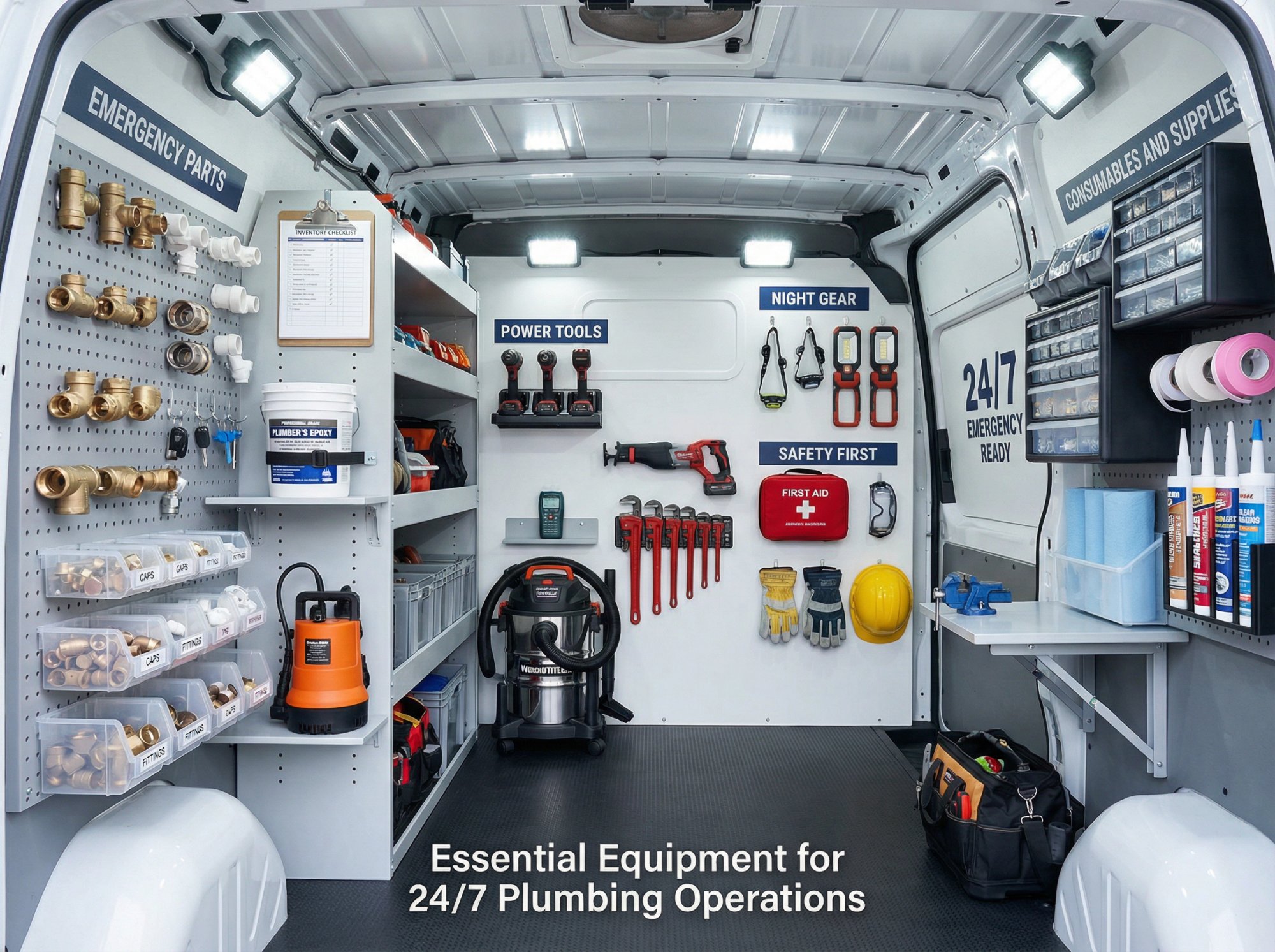
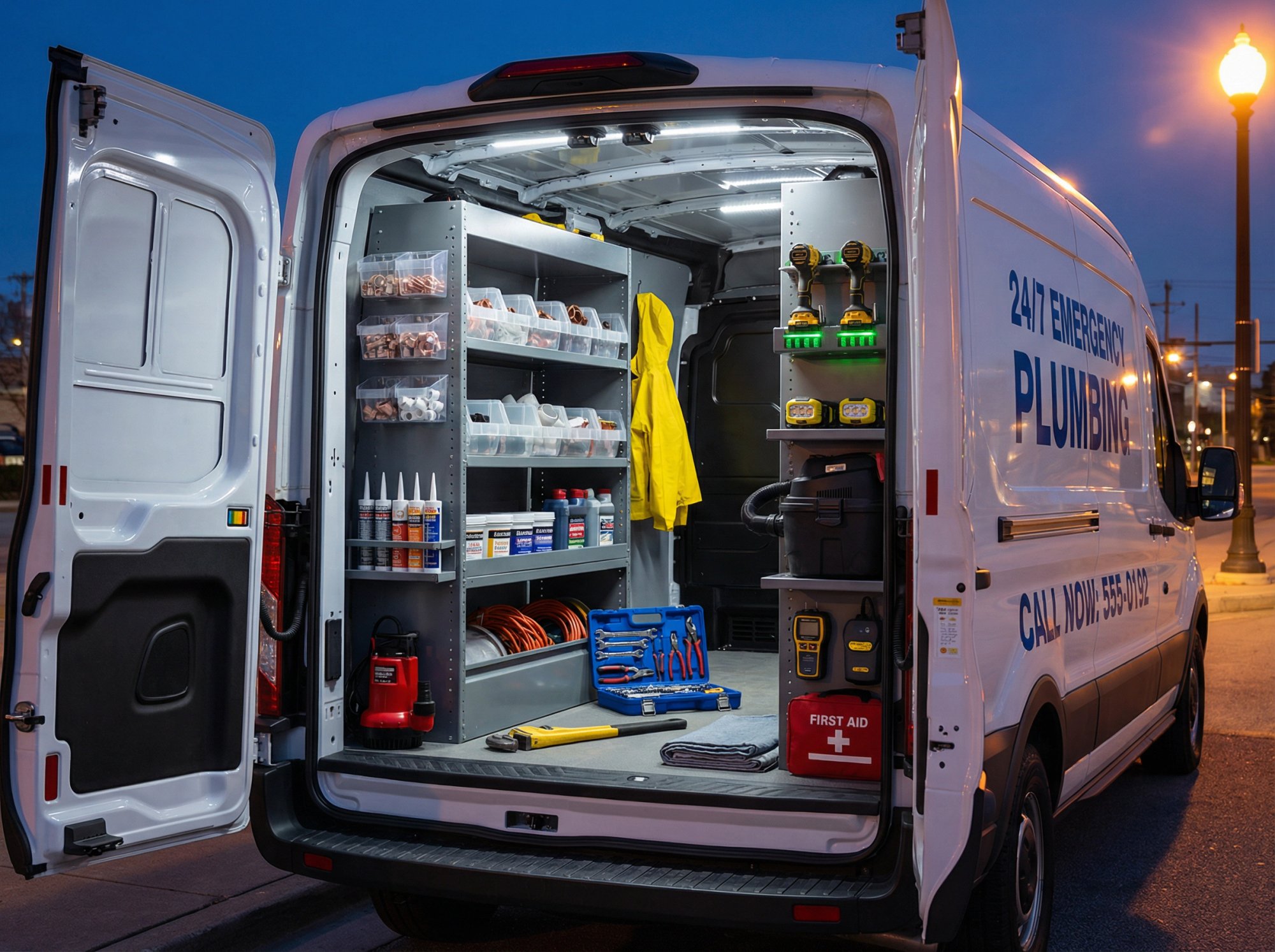
Your truck is your lifeline. It needs to be dependable and fully stocked because supply houses won't be open at 1 AM.
Essential emergency repair inventory:
• Various pipe fittings, caps for sealing leaks
• Plumber's epoxy, submersible pump
• Water shutoff key, battery-powered tools
• Industrial wet/dry vacuum, moisture meters
Night work equipment:
• Headlamps and portable work lights for dark basements
• Safety gear (gloves, goggles, first aid kit)
Having critical parts on hand can mean the difference between fixing the problem immediately versus doing a temporary patch.
How to Set Up a Professional Business Phone Line#
Set up a professional phone number separate from your personal line. You can use a VoIP service that forwards to your cell phone, giving you professional features like call routing, distinctive ringtones for business calls, and voicemail transcription.
This also makes it easier to implement answering services or AI receptionists later without involving your personal number. The phone line becomes a business asset you can manage independently.
How to Build a Website That Gets Emergency Calls#
Create a simple website that screams "24/7 EMERGENCY SERVICE" in the header. Even a single-page site works if it clearly lists your services, service area, and makes the phone number impossible to miss.
Many panicked customers will quickly check your website or Google listing at 2 AM to verify you're actually available. Make it obvious.
Set up your Google Business Profile immediately. List your hours as "Open 24 hours" for every day. Add photos of your truck and equipment. This free listing often appears at the top of mobile searches, which is where emergency customers are looking.
How to Set Up a Call Dispatch System#
This is crucial: Think through exactly how incoming calls get handled.
In a one-person operation, your cell phone might be the entire dispatch system. That's fine. But set it up so you NEVER miss calls. Use custom ringtones that bypass "Do Not Disturb" mode. Make your business line ring loudly enough to wake you up.
Later, when you have employees or partners, you'll need call routing. Maybe you rotate a "night phone" between team members on different days, or use a VoIP system that automatically forwards to whoever's on the schedule.
Formalize this process. The last thing you want is confusion over who should answer a 3 AM call while the customer tries three competitors and gives up on you.
How to Answer Plumbing Calls 24/7 Without Burnout#
In emergency services, availability is everything. If your phone rings and no one answers, that customer moves on within minutes. Plumbing is one of those industries where they'll call the first plumber who picks up.
Here's how to ensure someone (or something) always answers before calls roll to voicemail:
Why Live Answering Beats Voicemail for Plumbers#
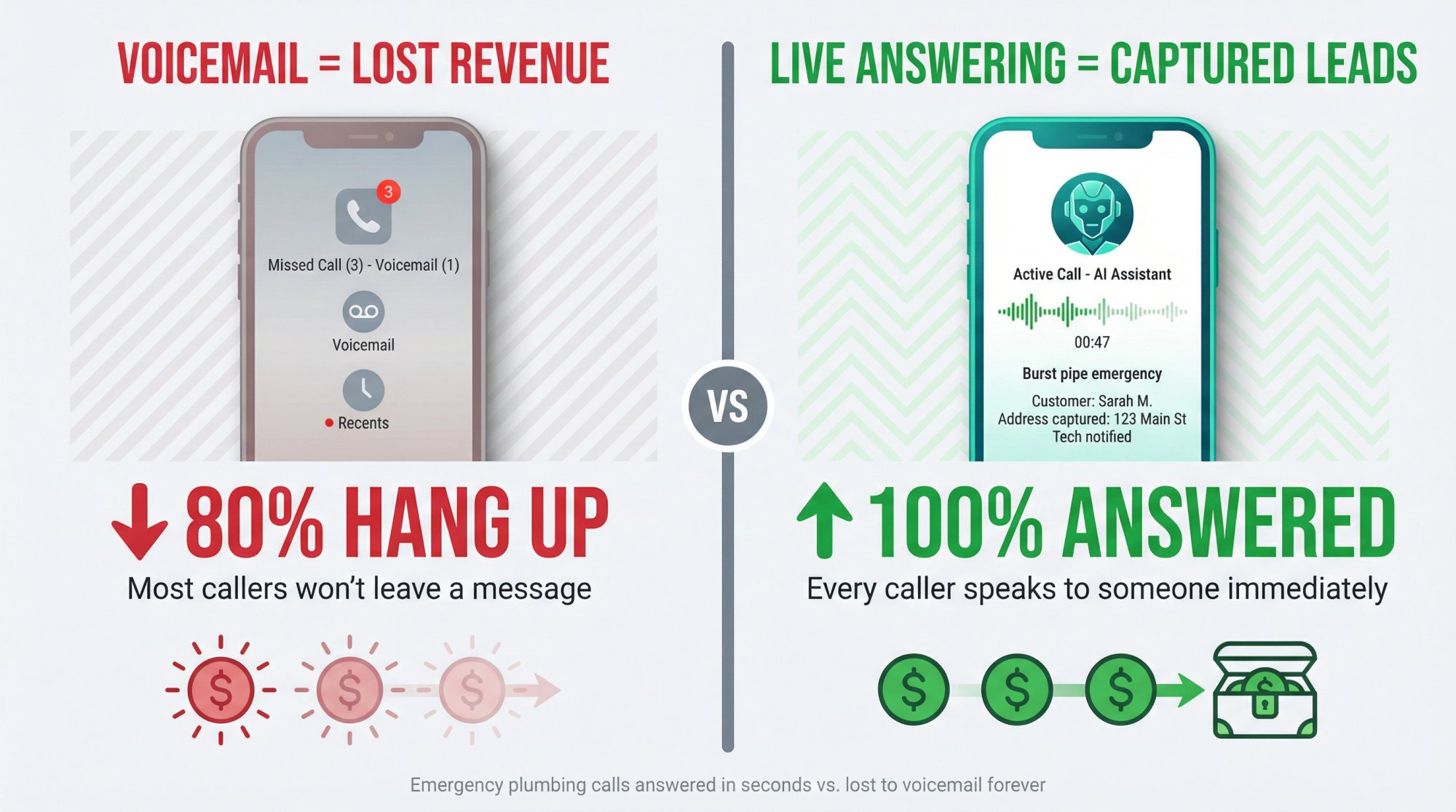
Remember that statistic: 80% of callers won't leave voicemail. That means voicemail equals lost revenue in most cases.
If you can't personally answer every call, you need an alternative. Traditional options include human answering services that field calls 24/7. But these can be expensive and still require coordination.
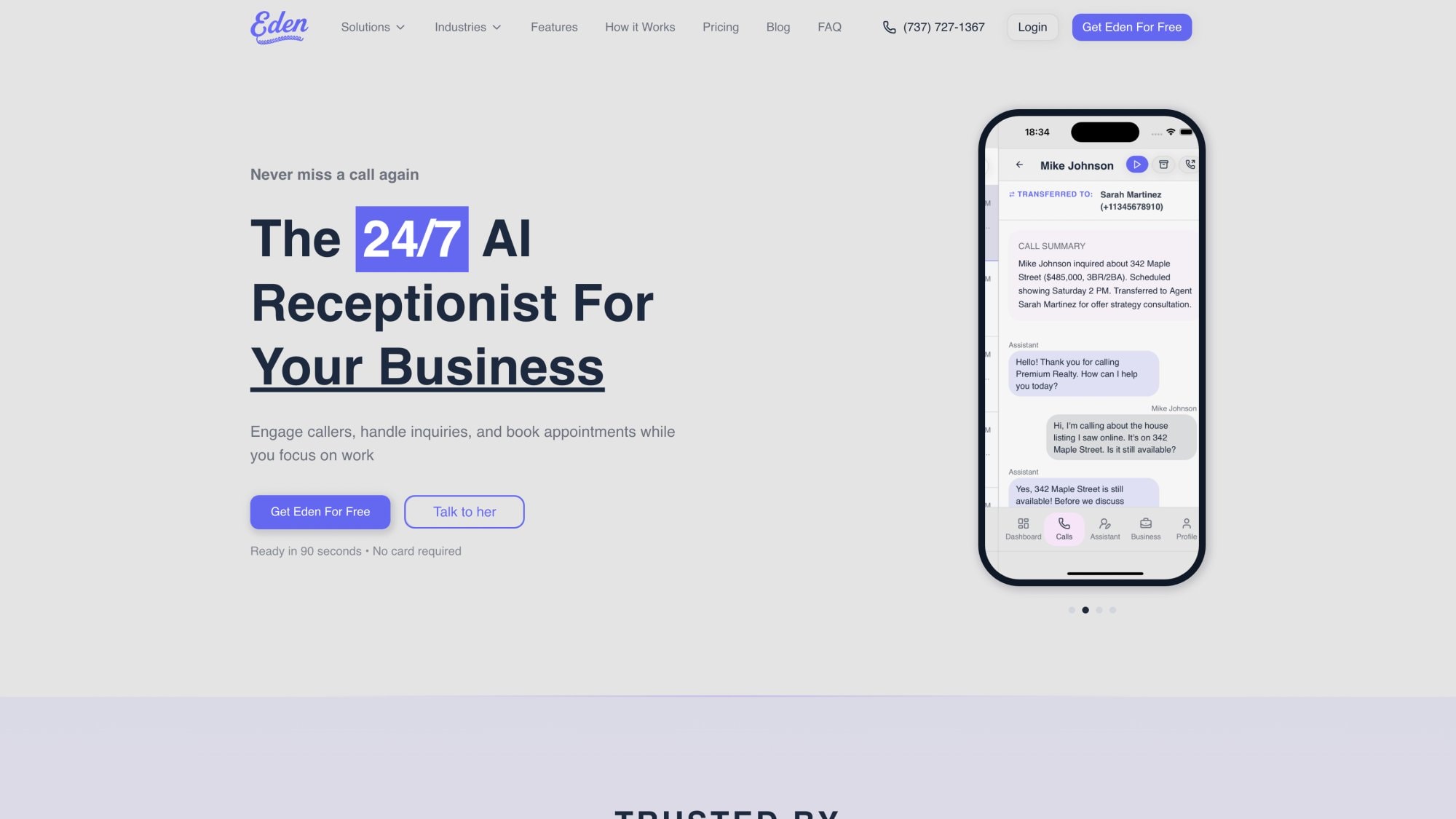
A modern alternative is AI-powered call handling. At Eden, we've built an AI receptionist specifically for service businesses like plumbing. It answers every call, speaks naturally with the caller, gathers their information and urgent details, and distinguishes true emergencies from routine inquiries.
For urgent calls, the system can transfer directly to you or your on-call tech. For less critical issues, it can politely schedule them for the next business day. Either way, the caller talks to someone immediately instead of hearing a beep.
The impact is significant. Plumbers currently lose about 30% of after-hours calls to voicemail, and most of those go to competitors. Capturing even half of those missed calls can dramatically increase revenue.
How to Create an On-Call Rotation Schedule#
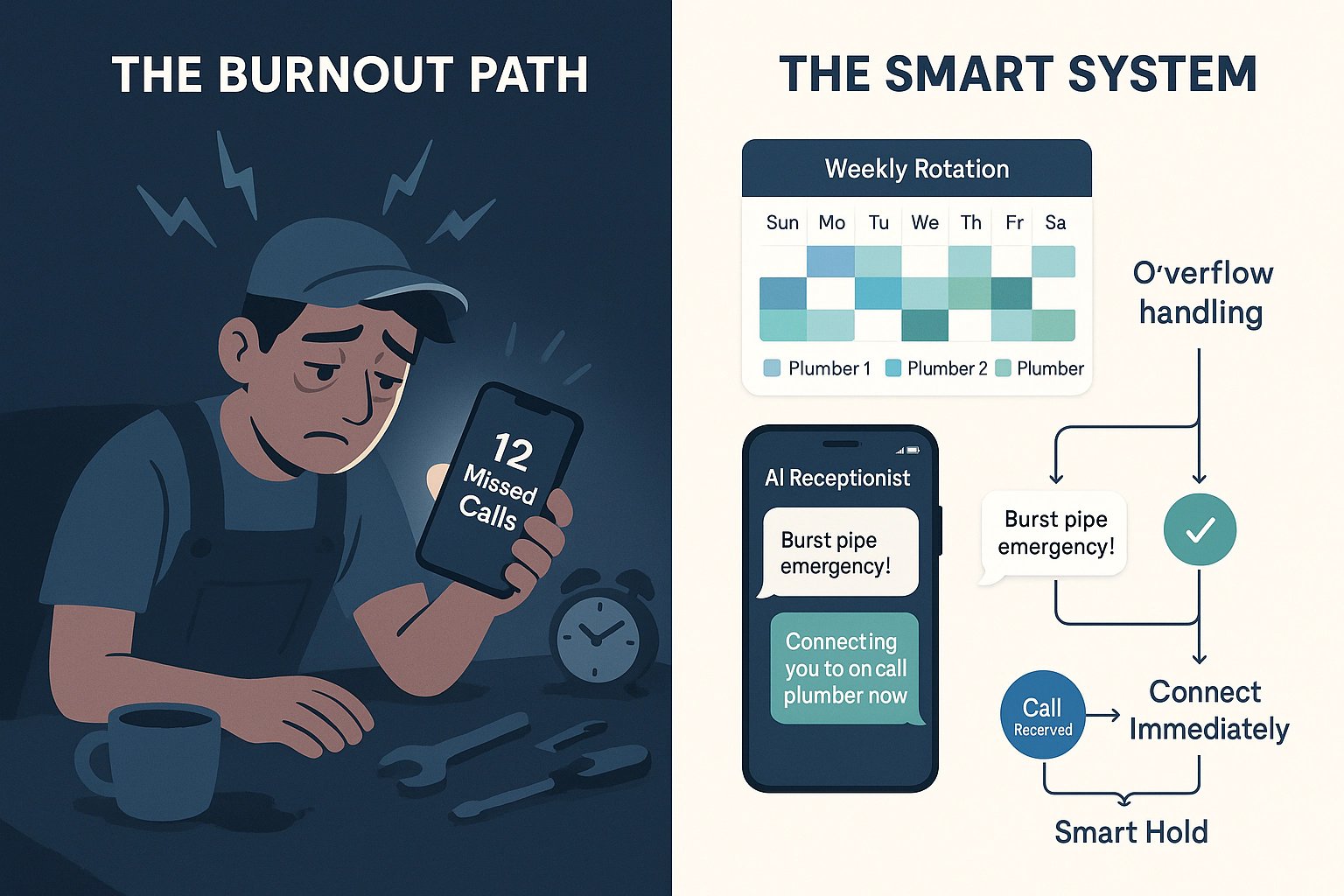
If you have a partner or employee helping, create a clear on-call schedule. Alternate nights or weeks so nobody burns out from constant availability.
When it's someone's turn, forward the business line to their phone or give them the company cell. Make sure they're prepared: sober, rested, truck stocked. Rotate fairly and stick to the schedule religiously.
Even if you're solo now, plan for this. Having a rotation system in mind makes it easier to bring on help later.
How to Use Technology to Never Miss a Call#
Being on call doesn't mean sitting by the phone all night. Use technology smartly.
Set custom ringtones that override Do Not Disturb mode. Some plumbers connect their business line to a nightstand speaker when on call, ensuring any 3 AM call genuinely wakes them. Find what works for you.
The key is reliability. If you need to answer at odd hours, you need to reliably hear the call coming in.
How to Handle Call Overflow During Emergencies#
What happens when you're already at one emergency and another call comes in?
Consider a subcontracting arrangement with another trusted plumber where you cover for each other's overflow. Or train your answering service (or AI assistant) to tell callers you'll return their call in 10 minutes, then actually do it.
Even a brief live interaction like "We're handling another emergency right now, but I've noted your issue and will call you back in 10 minutes" can make customers wait for you instead of calling someone else.
Every unanswered ring represents hundreds or thousands of dollars walking away. One midnight emergency job alone can bring in substantial revenue. Don't let those opportunities slip through.
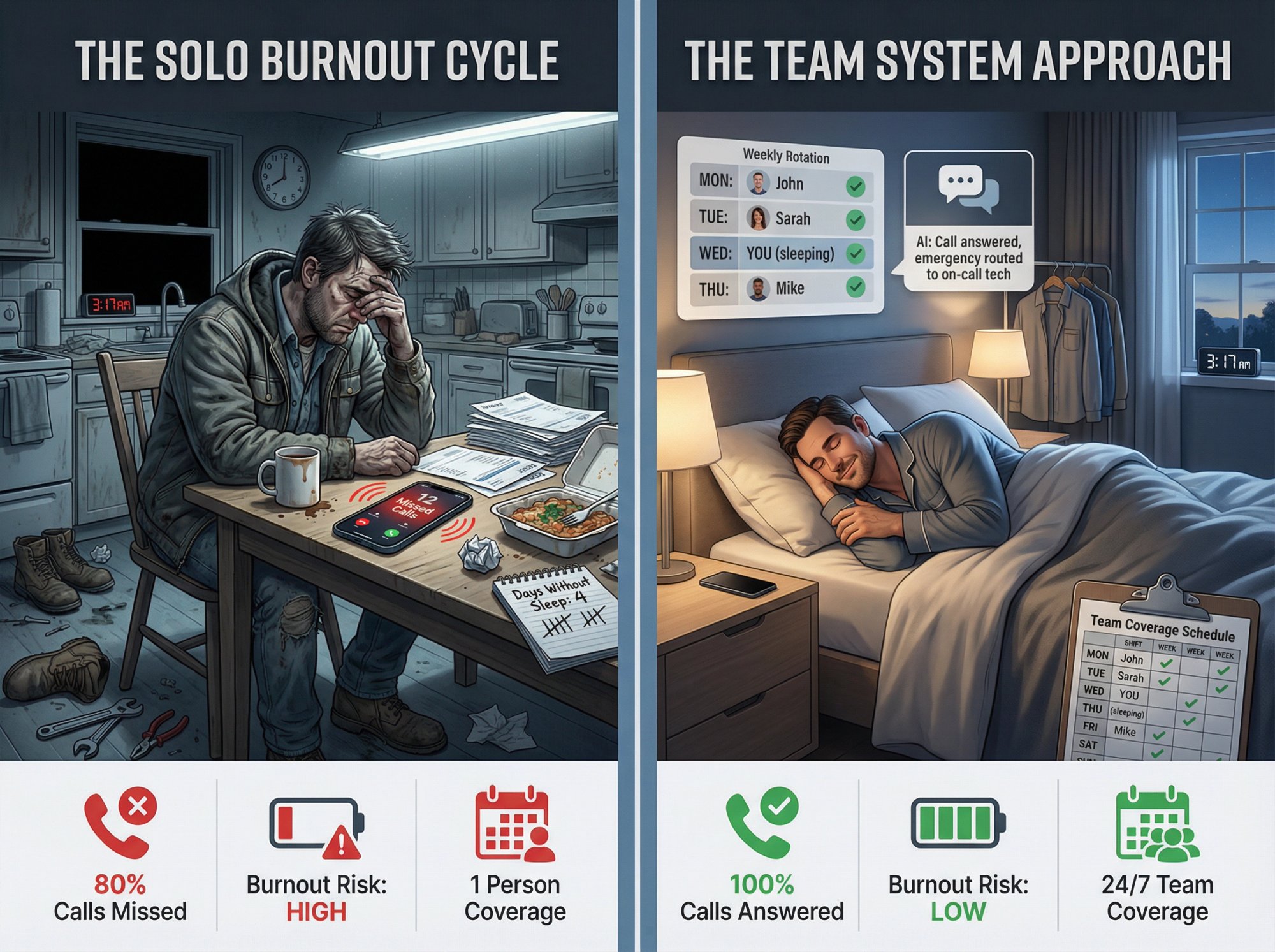
Speed wins jobs in emergency plumbing. The business that answers first usually gets the work. Make sure that's you.
How to Set After-Hours Plumbing Rates#
Customers expect to pay more for emergency service. But they also fear being gouged when they're vulnerable at 2 AM.
Your pricing strategy needs to balance these concerns while ensuring profitability.
What Do Emergency Plumbers Charge Per Hour?#
Emergency plumbers cost about $170 per hour on average in the U.S., with typical ranges from $100 to $500+ depending on the situation and timing. That's considerably higher than standard daytime rates (around $90/hour in many areas).
The increase is normal and expected. It covers the inconvenience and extra effort of responding immediately at odd hours.
Many plumbing companies use tiered pricing based on when the call comes in:
| Timing | Rate Multiplier | Example (if base rate is $100/hr) |
|---|---|---|
| Regular hours | 1x | $100/hour |
| After-hours weekday | 1.5x | $150/hour |
| Weekends | 2x | $200/hour |
| Major holidays | 3x | $300/hour |
Some plumbers charge 1.5x their normal rate for after-hours weekday emergencies and up to 3x for major holiday calls. This structure makes sense to customers because it's predictable and explains why holiday emergencies cost more.
How to Structure Service Fees and Estimates#
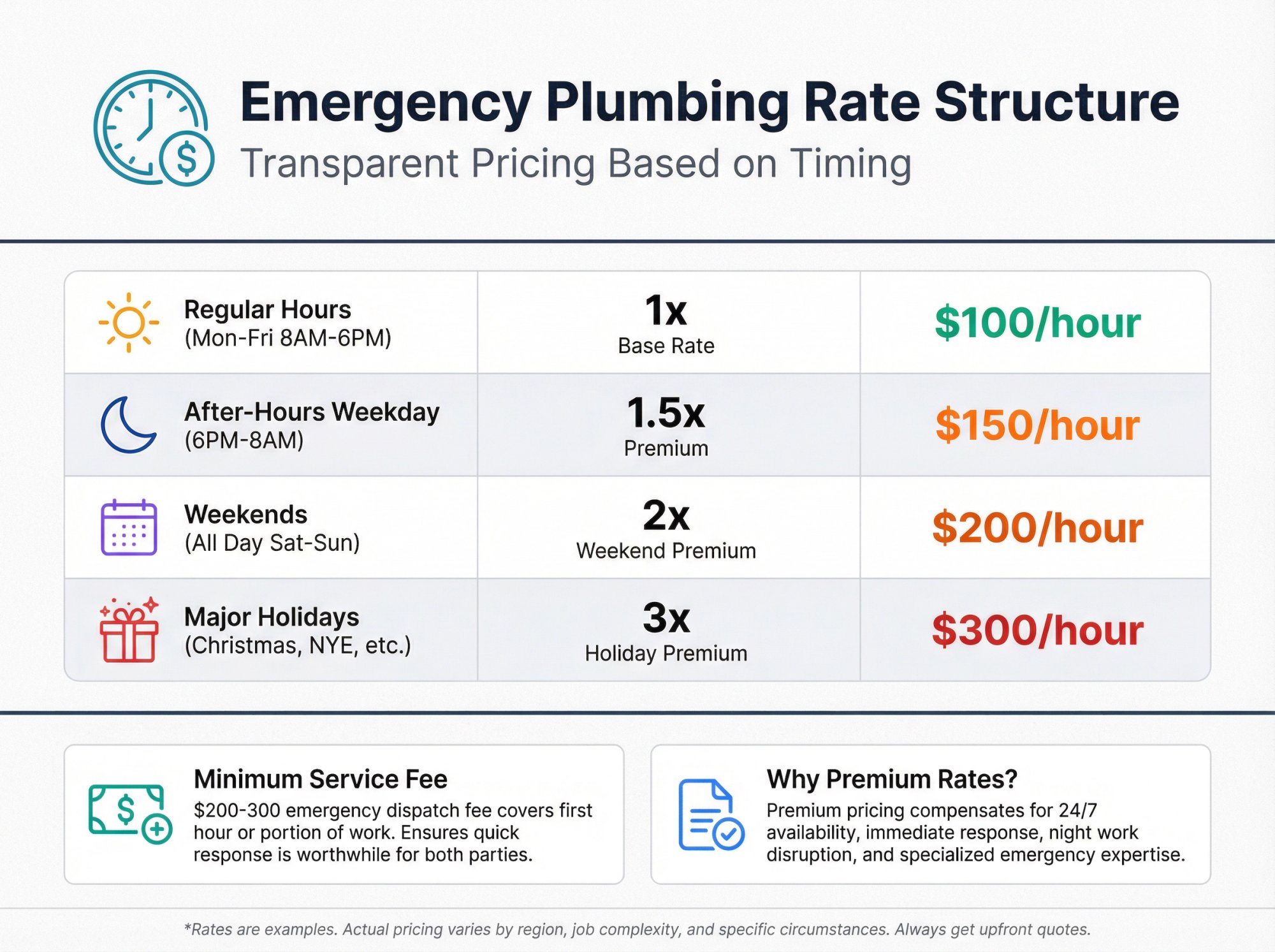
Minimum service fee: Many emergency plumbers charge a flat dispatch fee (often $200-300) that covers the first hour or portion of work. This ensures very short jobs are still worth your trip.
Communicate this upfront: "Yes, we can come now. Our emergency visit fee is $200, which covers the first hour of work. If we need more time, it's $150 per hour after that."
Most people appreciate knowing costs before you arrive, especially during a stressful moment.
Ballpark estimates: While you can't diagnose issues without seeing them, you likely know typical ranges for common fixes. Saying "burst pipe repairs usually range from $300 to $800 total depending on extent, plus the after-hours fee" helps manage expectations.
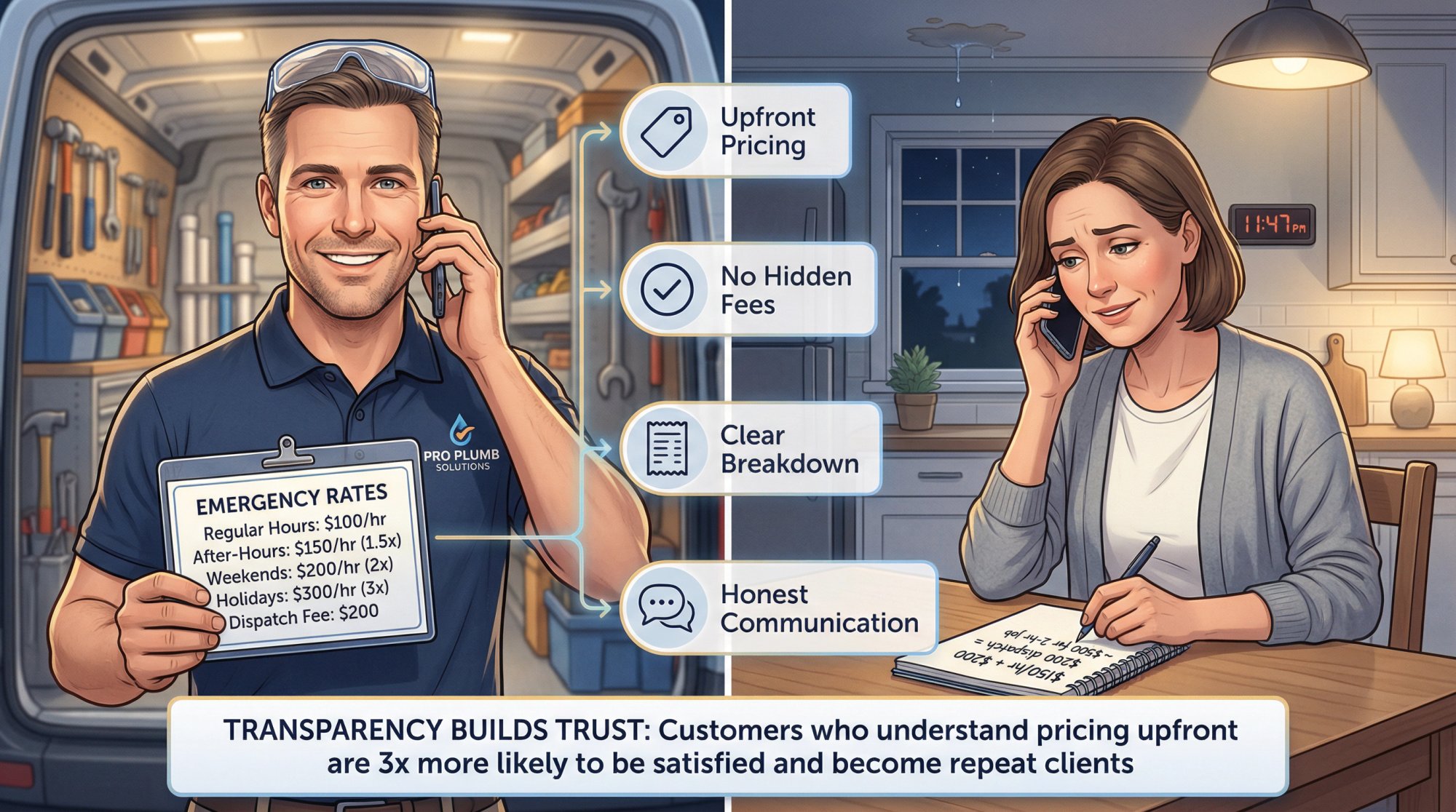
Transparent communication: Always be upfront that after-hours work costs more than daytime appointments. Don't spring higher bills on customers after the fact.
A simple conversation when they first call builds trust: "Because this is after our normal hours, we do charge an emergency rate. Let me explain how that works..."
Informed customers who agree to pricing upfront are far more likely to be satisfied (and pay promptly) than those who feel ambushed.
Why Emergency Rates Are Worth the Premium#
Don't apologize for higher emergency rates. You're providing immediate relief during a crisis. When a homeowner sees water pouring through their ceiling, they understand the difference between getting help now versus waiting until morning.
You're charging not just for time on site, but for the total impact of maintaining 24/7 availability. Charging $600 for a midnight call isn't about the five minutes it takes to fix something. It's compensating for the disruption, ensuring you can function the next day after being up all night, and maintaining the infrastructure to be available.
You're selling peace of mind. That has value.
How to Stay Competitive Without Undercharging#
Research what other local emergency plumbers charge. You don't want to be vastly more expensive without justification.
But don't undervalue your service either. Running a 24/7 operation has real costs. Your pricing should reflect the premium nature of on-demand help.
Revisit rates periodically as your business grows. Inflation, fuel costs, and increased demand might justify adjustments. The goal is a model where you feel rewarded for late-night work and customers feel they received critical help at a fair price.
How to Hire and Schedule After-Hours Plumbing Staff#
Being on call 24/7 indefinitely is a recipe for burnout. Working after hours can strain even the most dedicated plumber.
As your business grows, adding help becomes essential for both quality of service and your sanity.
What to Look for in Your First After-Hours Hire#
Look for someone with experience and reliability, but also specifically discuss the nature of after-hours work. Not everyone wants to do night and weekend calls.
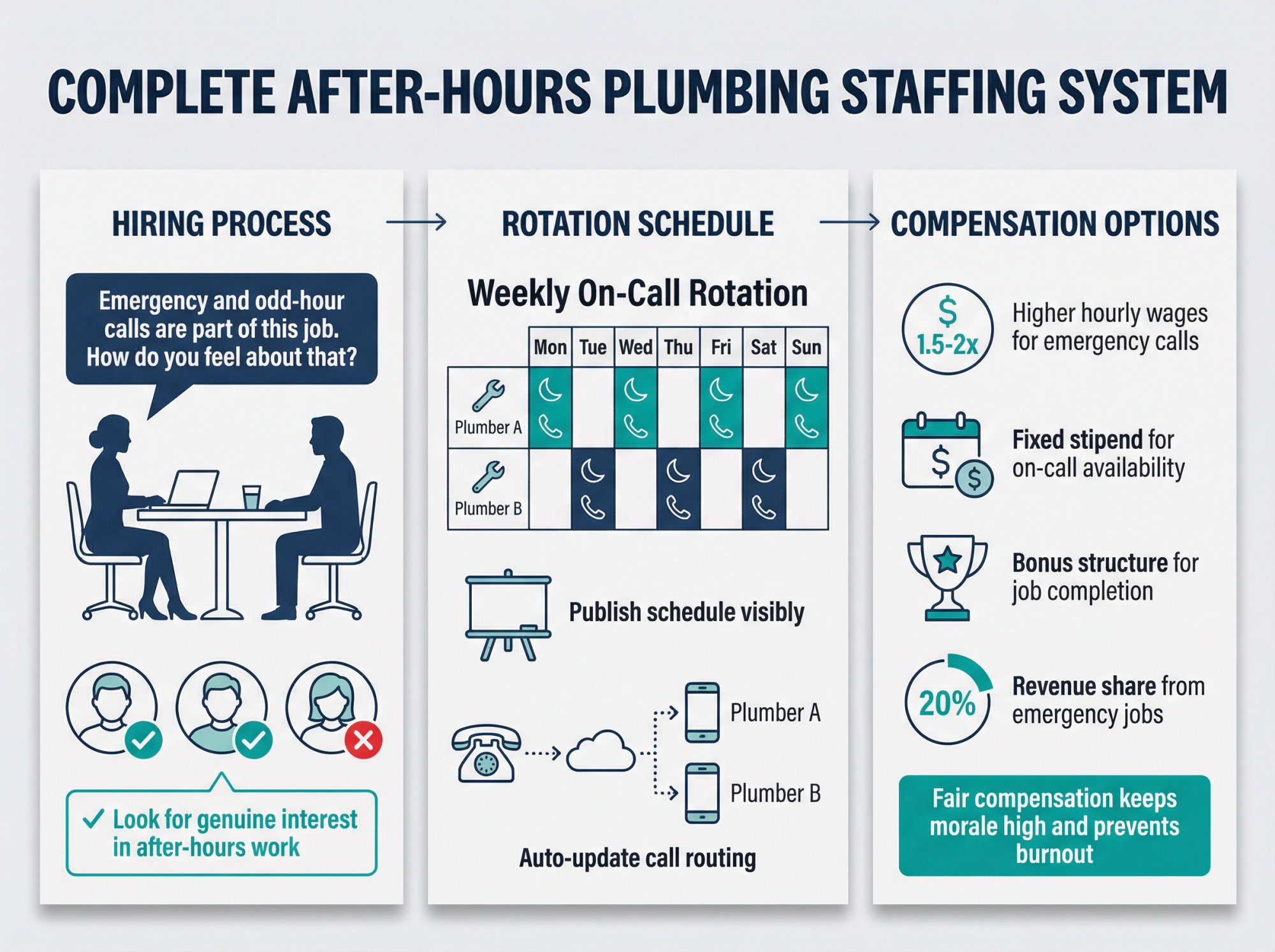
In interviews, be upfront: "Emergency and odd-hour calls are part of this job. How do you feel about that?" Gauge their reaction. Some technicians prefer strictly 9-5 work. Others appreciate the opportunity for overtime pay and bigger emergency job commissions.
Hire the ones who show genuine interest in the after-hours model.
How to Build an On-Call Rotation That Works#
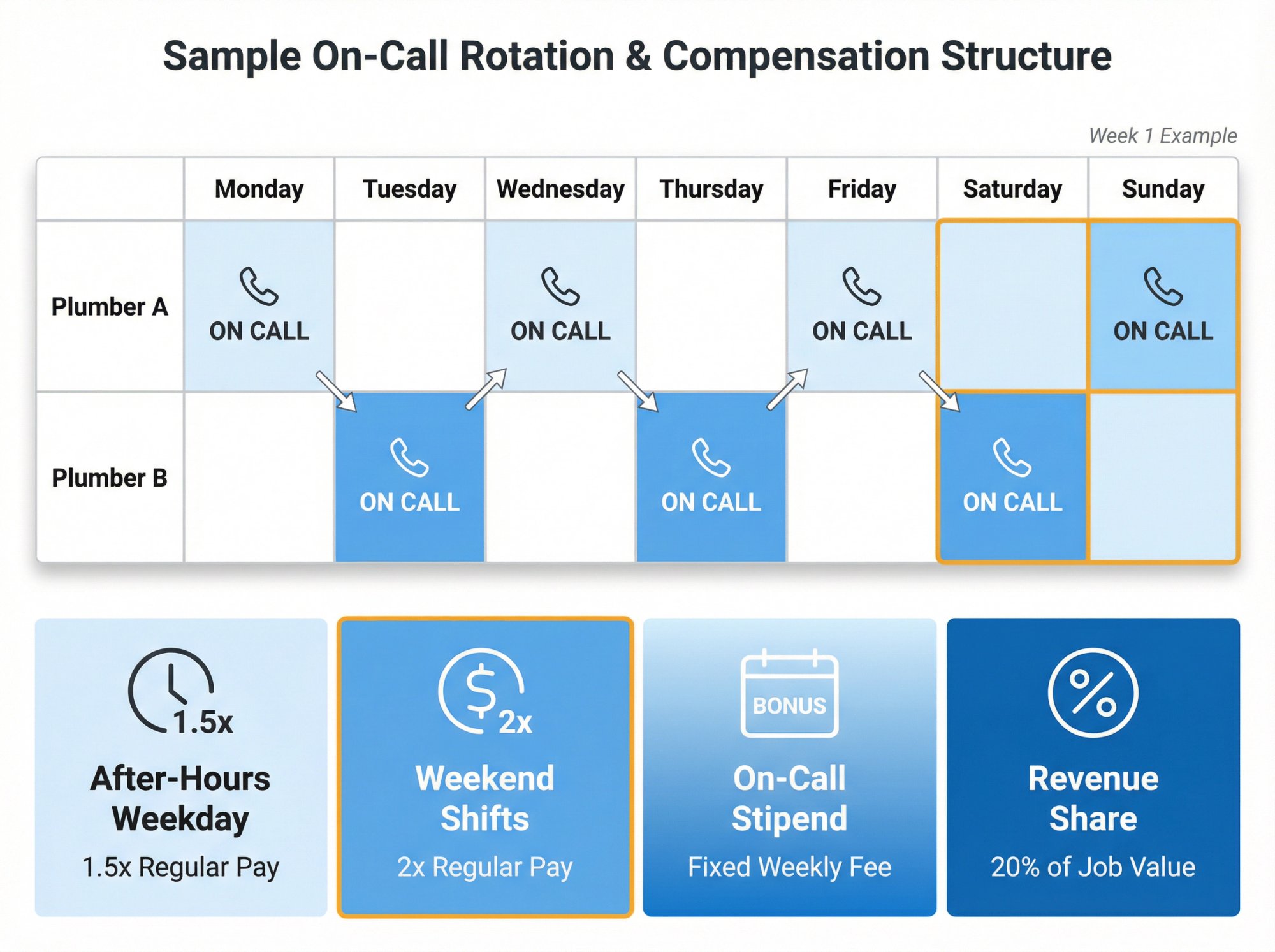
Once you have at least two people, create a formal on-call rotation. Maybe you handle Mondays, Wednesdays, Fridays. Your employee handles Tuesdays and Thursdays. You alternate weekends.
Or do week-on, week-off rotations. Find a balance that gives everyone guaranteed nights off-duty.
Stick to the schedule. Publish it on a whiteboard or shared calendar so everyone knows who's "up" on any given night. This prevents confusion and ensures accountability.
Update your call routing to match the schedule automatically.
How to Pay Employees for After-Hours Plumbing Work#
Late-night plumbing isn't for everyone, so reward those who do it.
Compensation options:
① Higher hourly wages for emergency calls (1.5x or 2x regular pay)
② Fixed stipend for being on-call even if no calls come in
③ Bonus structure based on emergency job completion
④ Percentage of revenue from emergency jobs they handle
Yes, this adds cost. But it's fair compensation that keeps morale high. Factor it into your emergency pricing.
If you partner with another independent plumber for mutual coverage, work out a referral fee arrangement. Maybe you give them 20% of revenue from jobs they sent your way during their off hours, and vice versa.
How to Train Staff for Emergency Plumbing Calls#
When bringing on new team members, train them specifically for emergency situations:
• How to calm anxious homeowners on the phone
• How to locate main water shutoffs in various building types
• Standard procedures for common after-hours fixes
• Communication standards (always call customers when en route, even at 4 AM)
If you're using an answering service or AI receptionist, train staff on how the handoff works. They might get texts or app notifications about new emergency leads in the middle of the night.
Everyone should understand the system so nothing falls through the cracks.
How to Market Your 24/7 Plumbing Service Online#
You could be the best emergency plumber in the world. If customers in crisis can't find you, it doesn't matter.
How to Rank for Emergency Plumbing Searches#
When disaster strikes, people grab their phone and Google "plumber near me open now" or "24/7 emergency plumber [City]". You need to appear at the top.
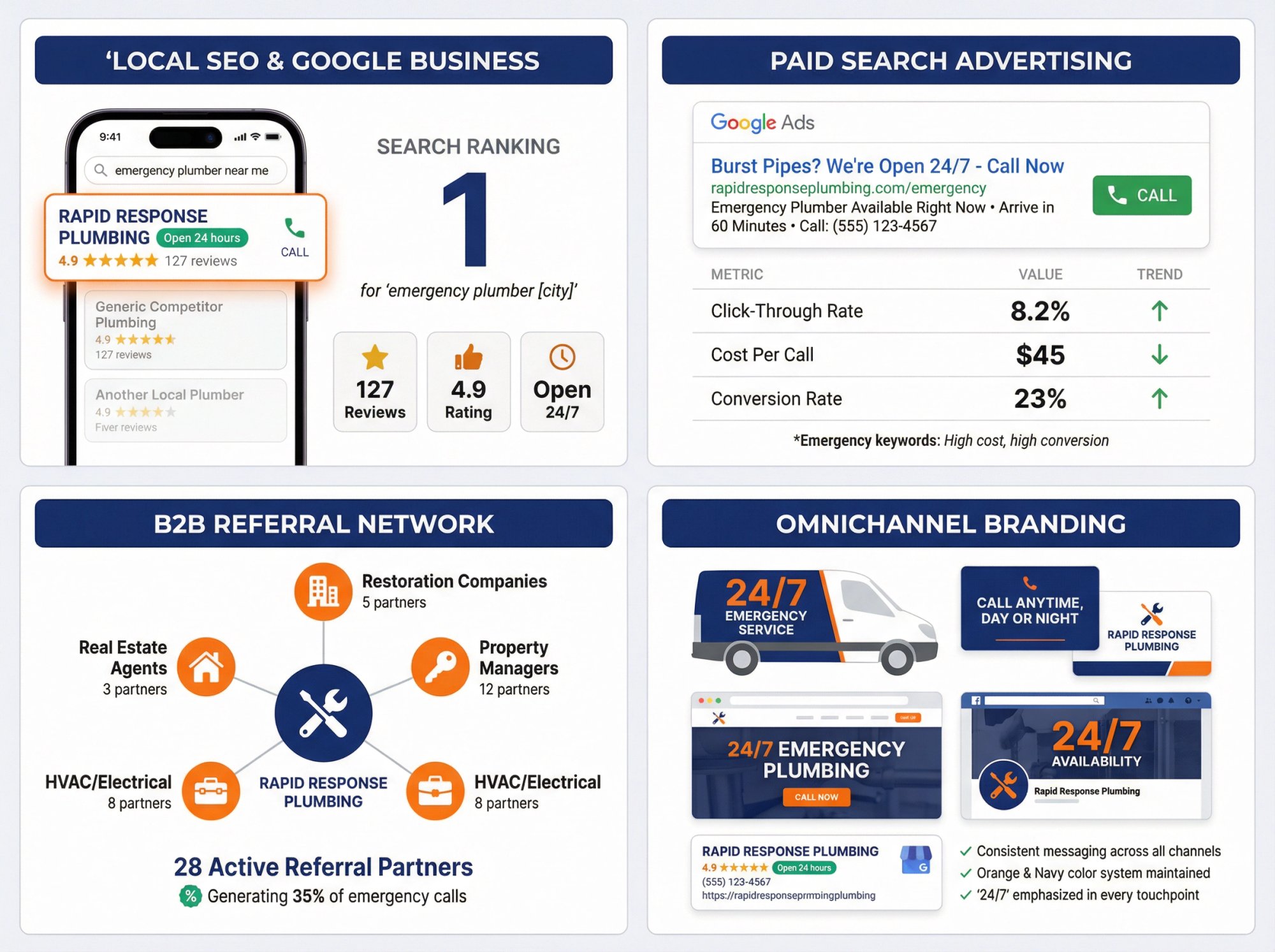
Claim and verify your Google Business Profile. Set hours as "Open 24 hours" every day. Add after-hours keywords to your business description. Encourage customers to leave reviews, especially ones that mention quick response at odd hours.
On your website, naturally include phrases like:
-
24/7 emergency plumbing
-
After-hours plumber
-
Night and weekend plumbing service
-
Emergency plumber available now
Regularly adding fresh content like blog posts improves search rankings and demonstrates expertise. Write about preventing winter pipe bursts, what to do when your water heater fails, or emergency steps to take before the plumber arrives.
When someone searches for emergency plumbing in your area, make your name impossible to miss.
How to Use Google Ads for Emergency Plumbing Leads#
In urgent situations, many people click the first result they see. Running Google Ads targeting emergency plumbing keywords puts you at the very top.
Focus on terms like "24/7 plumber [Your City]" or "emergency plumber now". Use ad copy that highlights immediate availability:
"Burst Pipes? We're Open 24/7 - Call Now for Fast Help"
"Emergency Plumber Available Right Now - Arrive in 60 Minutes"
Use call extensions in your ads so your phone number is clickable right from the search result. On mobile devices, this creates instant calls.
Make sure the ad clicks go to a page that clearly states "Yes, we are open and ready to help RIGHT NOW." Any hint of doubt and panicked users hit the back button.
PPC isn't cheap for emergency keywords. But one big job can justify significant ad spend. Being the first result at midnight is worth it when competitors are offline.
How to Get Referrals from Related Businesses#
Build relationships with businesses that encounter plumbing emergencies:
→ Restoration companies (water damage cleanup) often need plumbers to stop the source of flooding
→ Property managers and landlords have regular after-hours needs for their tenants
→ HVAC and electrical contractors sometimes encounter plumbing issues during their jobs
Being top-of-mind with these partners gets you referrals at times when customers don't have the luxury of shopping around.
How to Brand Your Business as Always Available#
Make sure every marketing piece screams availability:
-
Truck wrap with "Available 24/7"
-
Business cards with "Call Anytime, Day or Night"
-
Website header with "24/7 Emergency Service"
-
Social media profiles mentioning round-the-clock availability
Repetition builds awareness that you're the one to call when emergencies hit.
How to Use Customer Reviews to Build Trust#
When you start getting late-night saves and satisfied clients, ask for reviews. A testimonial that says "I called at 11 PM and they answered on the first ring" or "Showed up within an hour on a Sunday" is worth its weight in gold.
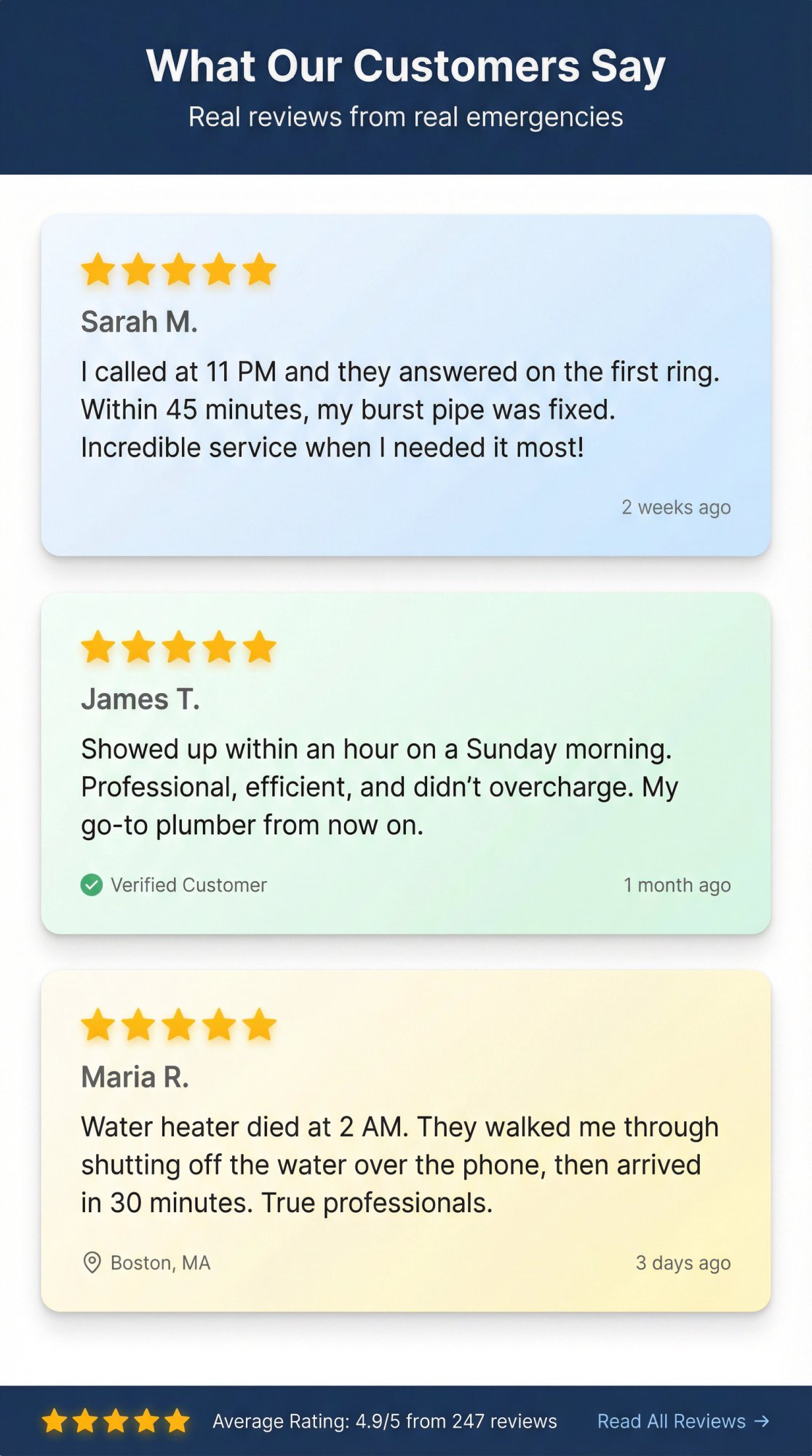
Share these (with permission) on your website and social media. They prove you actually deliver on your 24/7 promise.
You can even create case studies: "How We Handled a Midnight Pipe Burst for a Local Family." This serves as both content marketing and subtle advertising of your capabilities.
The goal is ubiquity when emergencies arise. Through SEO, paid search, networking, and consistent messaging, you ensure panicked customers find you first and feel confident reaching out.
How to Deliver Great Service on Emergency Calls#
Showing up promptly is half the battle. What you do on-site determines whether that customer becomes a loyal client or a one-time transaction.
Emergency customers are stressed, sleepless, and worried. How you handle the situation matters immensely.
How to Arrive Prepared for After-Hours Jobs#
Response time is critical. If you said "I'll be there in 45 minutes," try to arrive in 30-40 if safely possible.
When you arrive, have ID or branded apparel so they immediately know who you are (especially important late at night). Have essential tools ready so you don't waste time searching through your truck.
If it's 2 AM and pouring rain, showing up with a raincoat and flashlight ready demonstrates professionalism instantly.
How to Calm Anxious Customers During Emergencies#
Take a moment to listen to their account of what happened. Acknowledge their concern with a calm, confident demeanor.
Explain in simple terms what you're going to do: "I know seeing water gush out is scary. First I'll shut off your main water valve to stop the flooding. Then I'll assess the burst pipe and either repair it now or cap it off so you can have water in the rest of the house until we do a full repair in the morning."
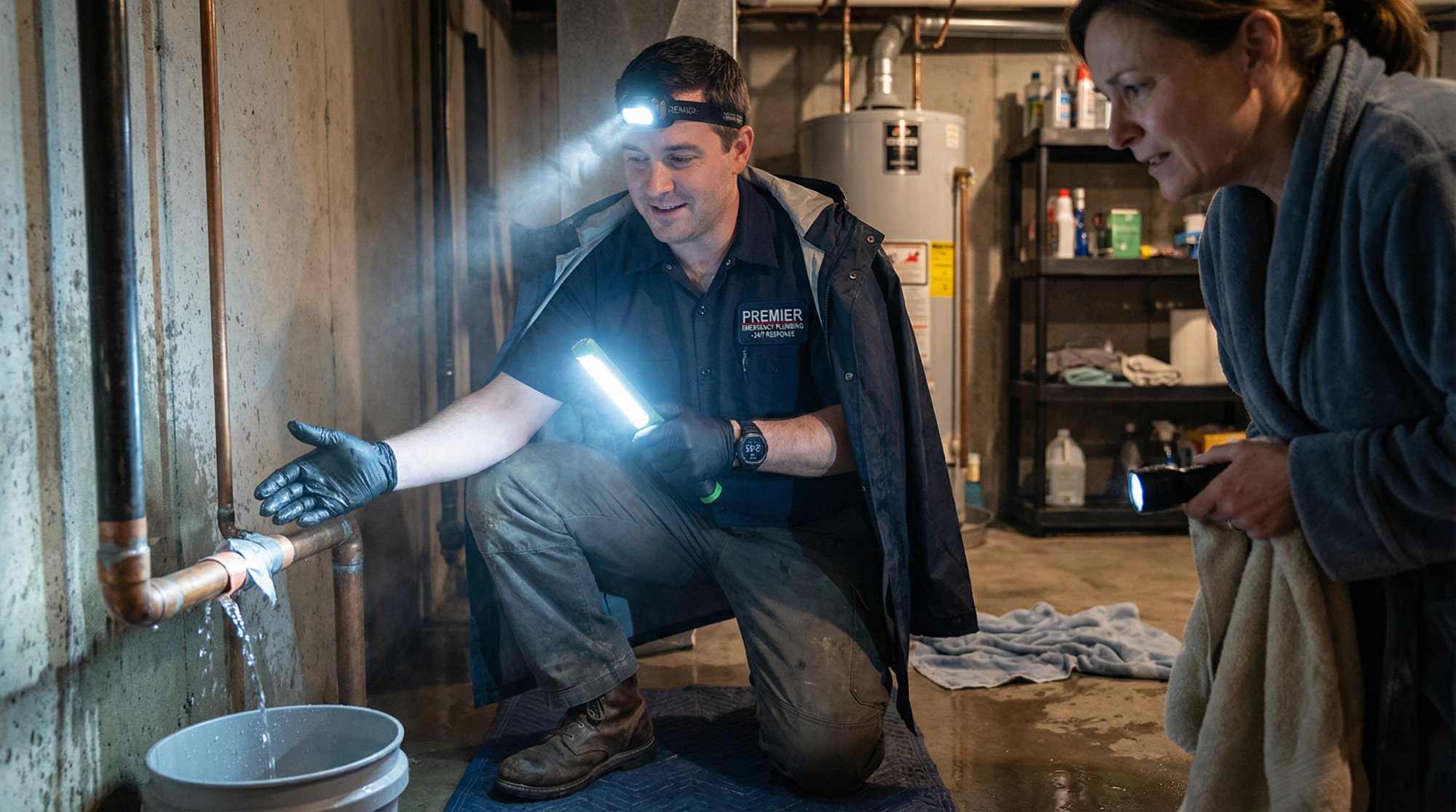
Keep them in the loop. Be honest if something requires a part you don't have or needs daylight to complete properly. Customers appreciate honesty and a clear plan more than empty promises.
Why Empathy Matters on Late-Night Calls#
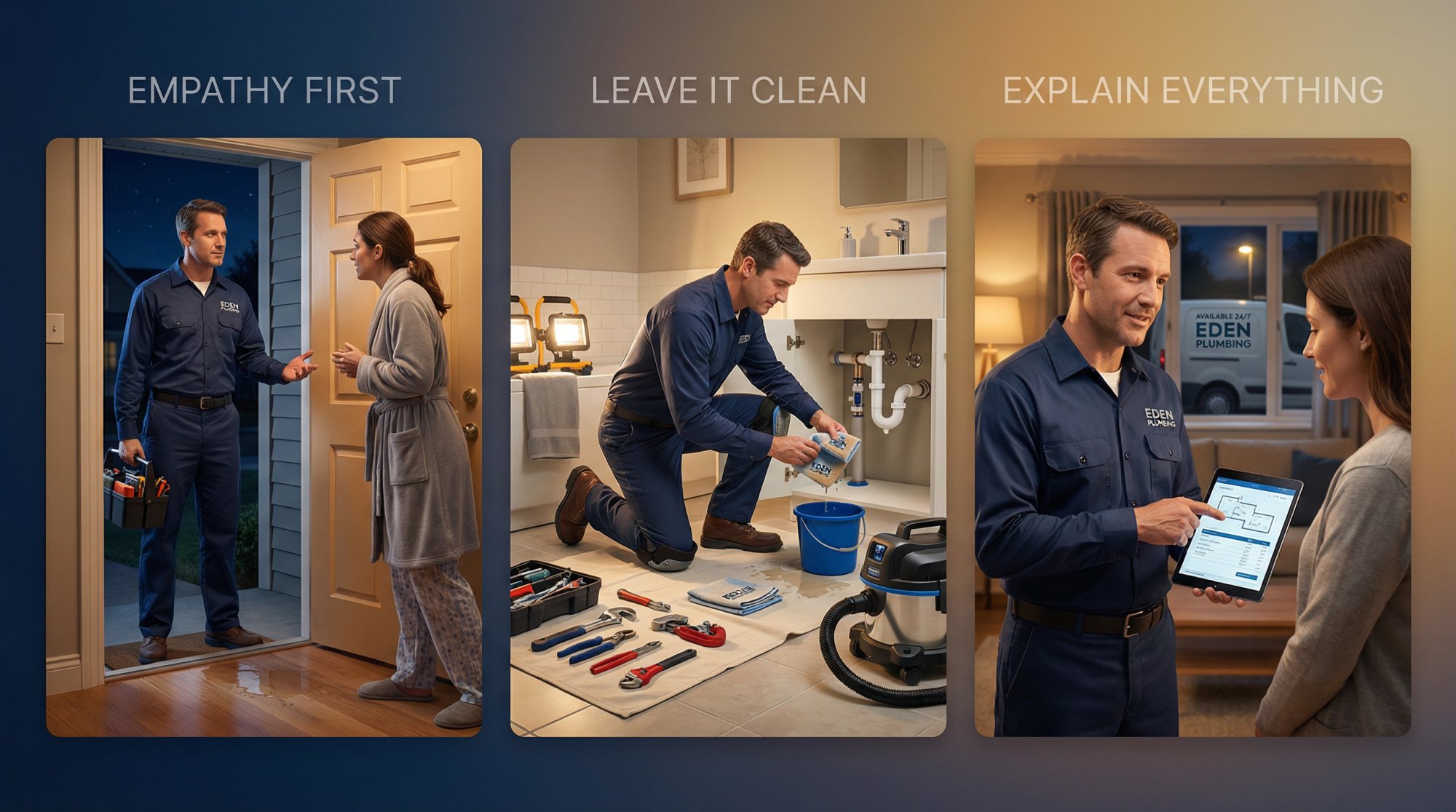
It might be the middle of the night for you, but it's a crisis for them.
Small gestures matter. If a client is upset about soaked carpet, offer to help move furniture out of the water. Use a respectful tone. Even though you might be exhausted, avoid showing irritability.
Never make customers feel guilty for calling you out late. That's literally the service you offer. Thank them for trusting you with the problem.
How to Leave a Clean Job Site After Emergency Repairs#
Emergency repairs can be messy. Contain it as much as possible.
Lay down drop cloths if you're trudging through with muddy boots. Use buckets to catch drips. After the repair, do a reasonable cleanup. Wipe up puddles. Make sure no tools are left around for someone to trip on.
The motto "leave the site as clean as you found it" applies even at 4 AM.
If you had to open a wall to access a pipe, do a neat cut that's easy to patch later and explain that to the owner. They'll appreciate seeing an orderly repair versus a jagged hole when they wake up.
What to Tell Customers Before You Leave#
Before leaving, give any important follow-up instructions:
"I've got your water back on except for that one line. You can use your plumbing normally, just avoid the guest bathroom sink until we replace that pipe tomorrow."
If you did a temporary fix, confirm when you'll return. If appropriate, give preventive tips: "Here's how you can drain your outdoor pipes when it freezes to avoid this happening again."
This educational approach can turn a one-time emergency caller into a loyal customer for regular maintenance.
How to Handle Payment for Emergency Plumbing Work#
Walk customers through the invoice: "This is the emergency service fee we discussed, this line is for two hours of labor, here are the parts I used."
Ideally you discussed pricing on the phone, so the final bill shouldn't surprise them.
Take payment on site using a mobile credit card processor or email an invoice they can pay online. Being efficient with paperwork is appreciated when it's late.
Mention any warranty on your work: "If anything goes wrong with this repair in the next 6 months, call me and I'll make it right." This boosts confidence in quality despite the rushed circumstances.
Why Following Up the Next Day Wins Repeat Business#
Here's where you separate yourself from 99% of competitors: Call or text the next day during normal hours.
Something simple like: "Just checking in. How is everything holding up since the repair? Any questions or concerns?"
This follow-up ensures the fix succeeded and leaves a lasting positive impression. It's rare and memorable: the plumber who called to make sure we were okay.
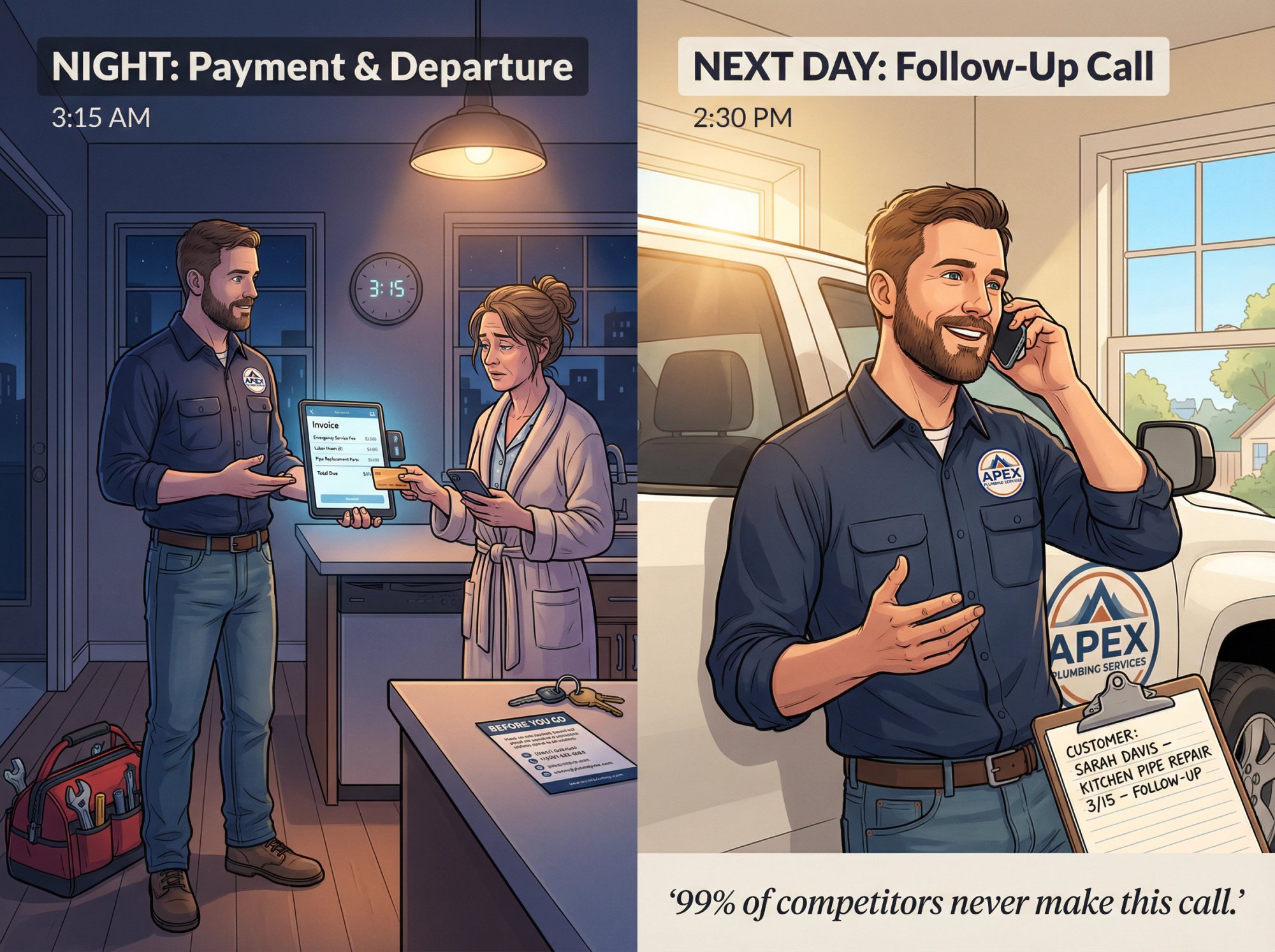
It's also a chance to discuss additional work: "We got you patched up last night, but I recommend we schedule a full replacement of that section of pipe. We can arrange a convenient time next week."
Many customers will proceed with additional work if you propose it calmly after the emergency is handled.
Service Philosophy: By delivering top-notch service when customers are most vulnerable, you're not just fixing pipes. You're building relationships and reputation. Those relieved smiles at 4 AM translate into five-star reviews and word-of-mouth referrals.
People remember who came to their rescue. They'll call you again for all their plumbing needs.
How to Grow Your After-Hours Plumbing Business#
Launching your after-hours service is just the beginning. To keep it successful long-term, you need to continuously improve and scale sustainably.
What Metrics Should Emergency Plumbers Track?#
Track key performance indicators so you know what's working:
| Metric | What to Track | Why It Matters |
|---|---|---|
| Call Volume | Emergency calls per week | Shows demand patterns |
| Response Time | Average time to arrival | Competitive advantage |
| Conversion Rate | Calls that become paid work | Marketing effectiveness |
| Revenue per Call | Average emergency job value | Pricing validation |
| Lead Source | Which marketing channels deliver | Budget allocation |
Use a simple spreadsheet or software tool to record this. Over a few months, patterns emerge that help optimize your business.
If you notice lots of calls on weekend nights but few on weekdays, adjust your marketing or staffing accordingly. If PPC ads bring many calls but few conversions, maybe your phone handling needs improvement.
How to Improve Your Emergency Response Procedures#
As you handle more jobs, learn from each one. Maybe you discover that having a second sump pump on the truck would have saved time on a flood job. Add it to your standard inventory.
Create checklists for common emergency scenarios: what to bring, what steps to take first. Share these with your team.
Consistency improves as you grow. You want every technician approaching emergencies with the same high standards.
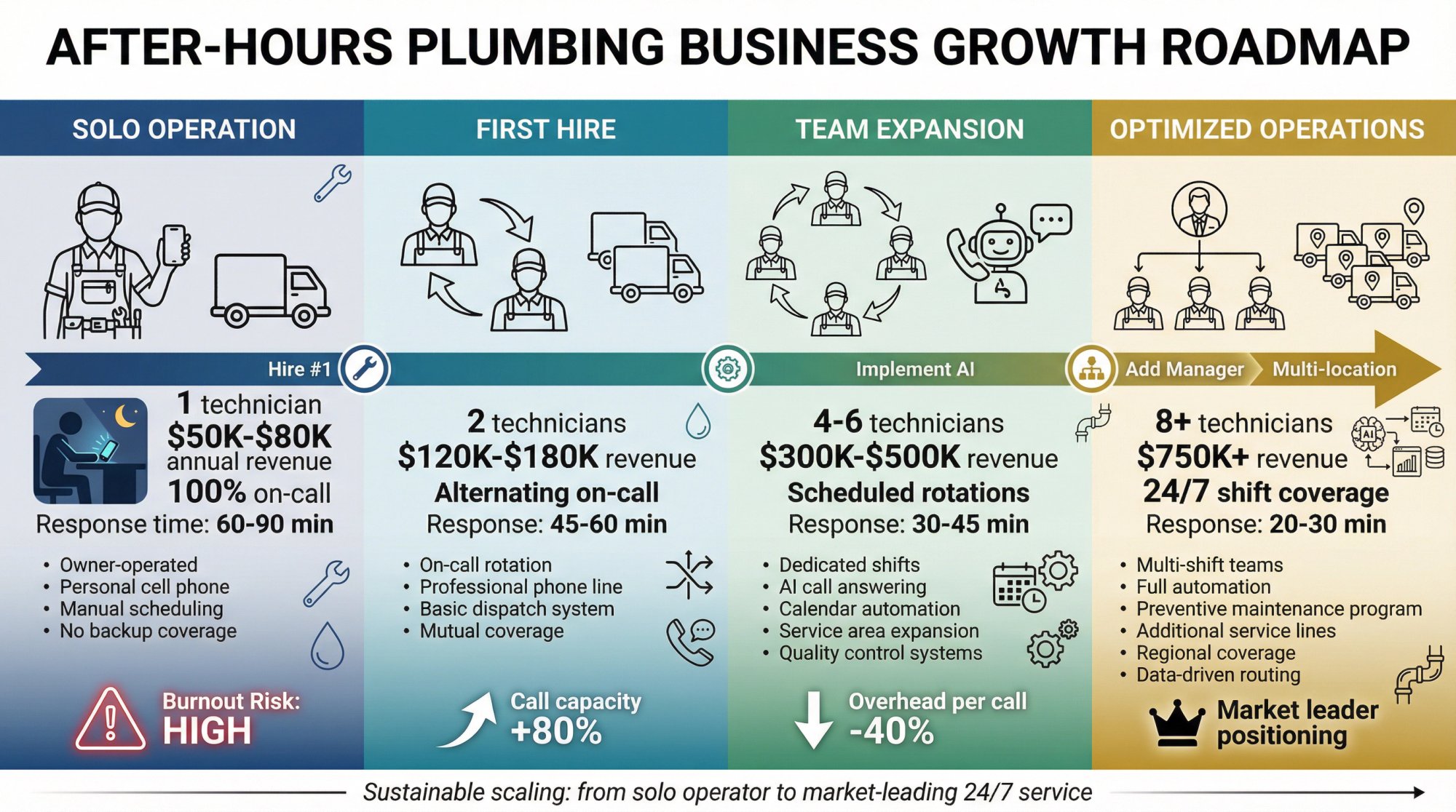
How to Avoid Burnout Running a 24/7 Plumbing Service#
Providing 24/7 service doesn't mean you personally work 24/7 forever.
Take care to rest whenever possible. If you had a brutal night, block off time the next afternoon to recuperate. As soon as revenue allows, hire help so you're not on every single call.
Burnout harms service quality and decision-making. It can spiral into unhappy customers or safety issues.
Consistency over time wins the race. It's better to be consistently great 95% of the time than a superhuman who eventually crashes.
Take vacations (or at least occasional weekends off) by arranging backup coverage. Even emergency plumbers deserve breaks to recharge.
When to Hire More Plumbers for Your After-Hours Team#
When you're consistently booking solid work and maybe turning down calls due to capacity, it's time to scale.
This might mean hiring another plumber or investing in more equipment. But do so carefully. Maintain quality as you grow.
Hire slowly. Train new staff thoroughly in your methods: customer service, technical skills, safety protocols.
One approach is adding an evening shift from 4 PM to midnight to handle early-night calls while you cover late night. As volume increases, you could establish a rotation or dedicated overnight tech.
Quality control is paramount. It's better to have a slightly smaller service area with reliable response times than to stretch so far you can't deliver on promises.
How to Add Services Beyond Emergency Repairs#
While emergency plumbing is your core, consider complementary services:
→ Preventative maintenance plans: After rescuing a customer, sell them on regular water heater flushes or inspections to prevent future emergencies.
→ Water damage restoration: If you team up with or hire a restoration specialist, you could keep more of the job in-house when flooding occurs.
→ Related emergency services: Maybe minor emergency HVAC or gas line repairs if you have the skills and certifications.
Be cautious not to dilute your plumbing focus. But natural extensions that customers request can boost revenue.
How to Use Software and AI to Run a 24/7 Business#
Continue adopting tools that make running a 24/7 business easier.
Scheduling and dispatch software can route calls, manage calendars, and send automated follow-ups to customers.
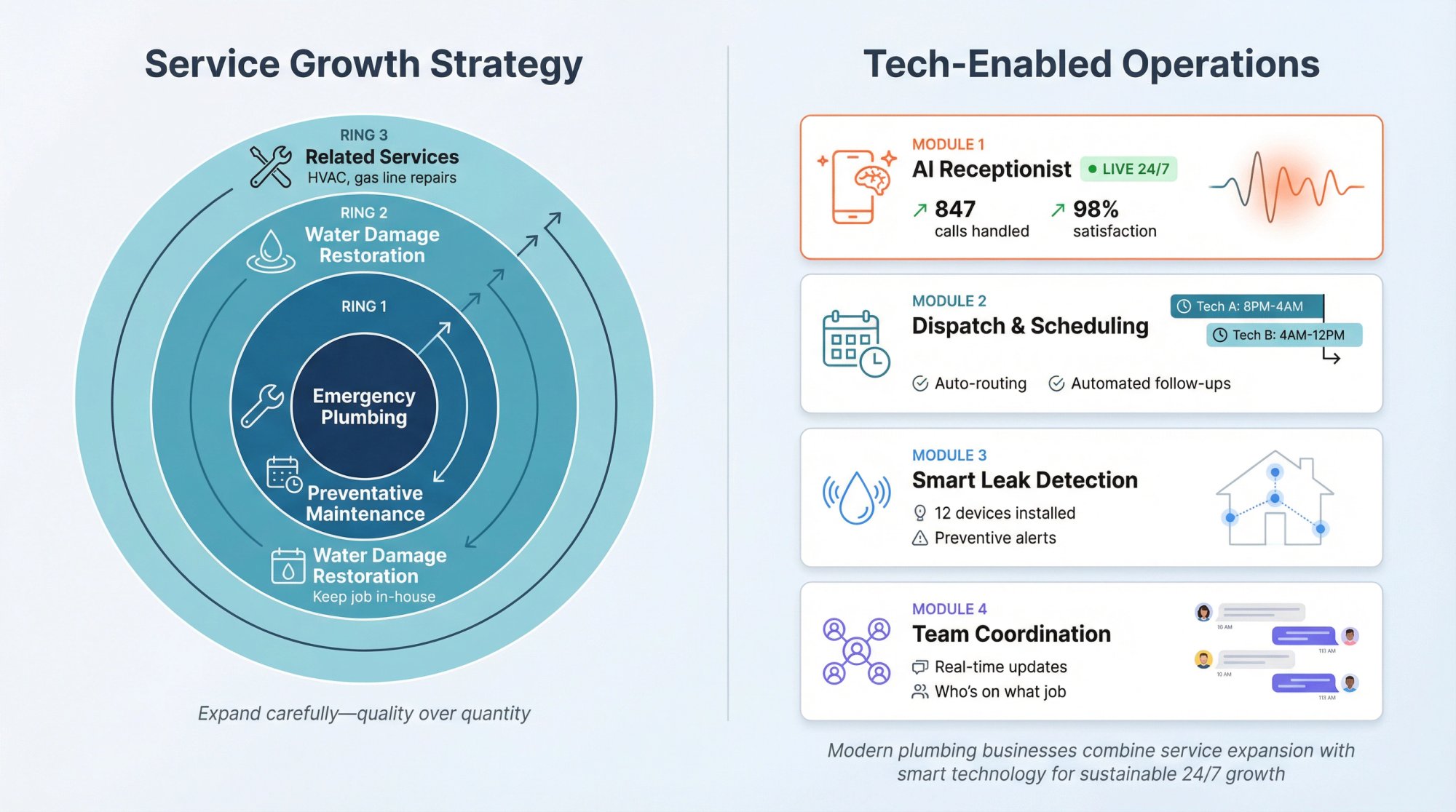
AI receptionists like Eden can handle initial call screening and routing, allowing customers to book online even after hours for non-urgent work.
Smart leak detection devices you install for customers can warn them before the next emergency, positioning you as a partner in prevention.
Technology helps with coordination too. Use group chats or dispatch apps if you have multiple techs, so everyone knows who's responding to what at odd hours.
How to Build a Reputation for Reliable Emergency Service#
As you grow, keep gathering feedback. Ask customers how you did. If you get constructive criticism (maybe response time was slower than expected), address it.
Reputation is everything in emergency services. Maintain integrity. Don't oversell work that isn't needed, especially during crises. Stand by your warranties.
Being known as honest and reliable creates a competitive moat. Community reputation can't be easily overcome.
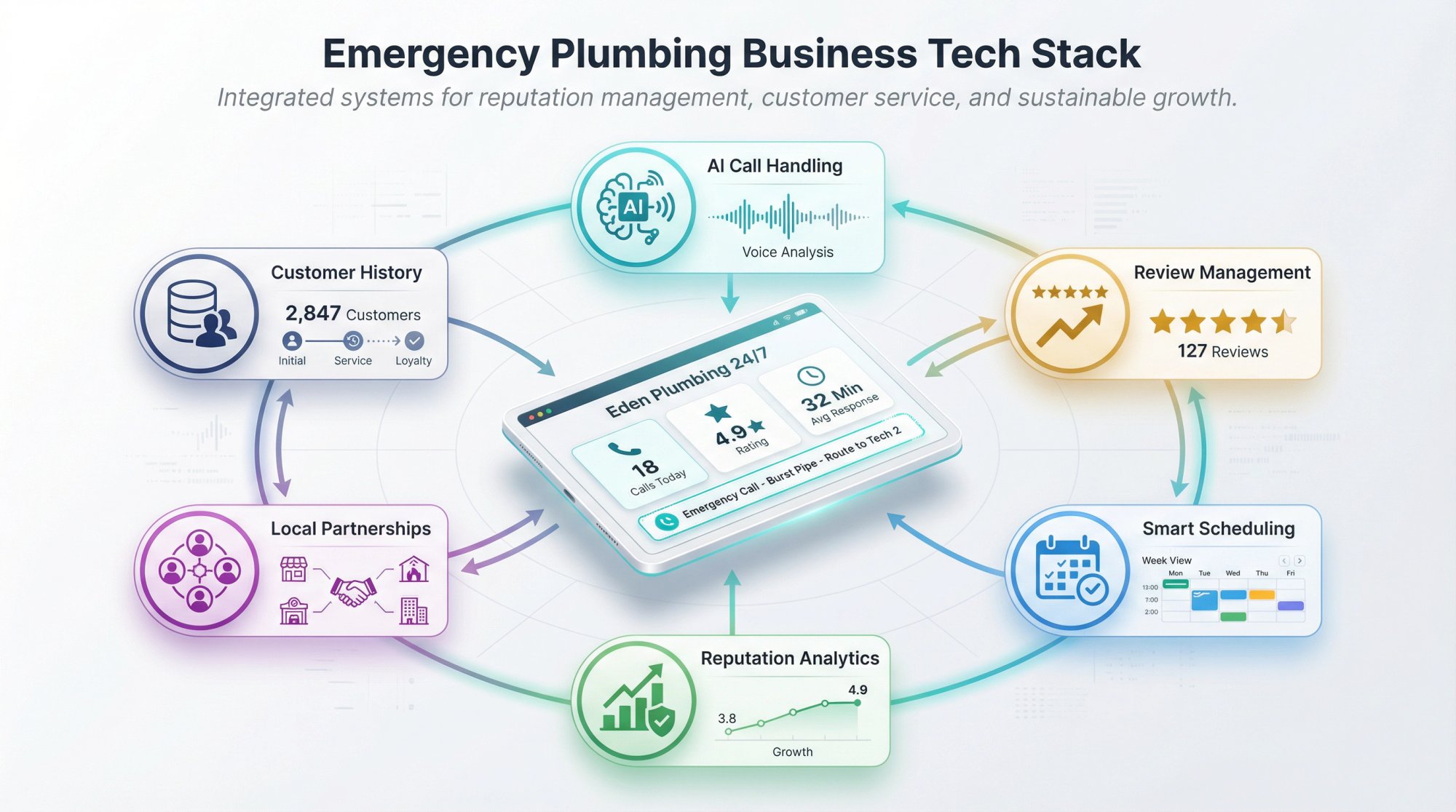
Engage in community events or sponsor local causes (donate to fire department events or flood relief efforts) to show you're invested in community well-being, not just making money off emergencies.
How to Celebrate Milestones in Your Plumbing Business#
Running an after-hours plumbing service is challenging. Not everyone can handle it.
When you hit milestones (your 100th emergency call, your first year, a great social media shout-out from a happy client), take pride in them. Share them with your team.
Acknowledging the positive impact you're making (saving people from disaster) keeps you and your staff motivated.
A growth mindset with appreciation for how far you've come will carry you through the tough nights that inevitably still lie ahead.
Frequently Asked Questions#
How Much Should I Charge for After-Hours Emergency Plumbing?#
Most emergency plumbers charge 1.5 to 3 times their normal hourly rate depending on when the call occurs. Industry averages show emergency rates around $170/hour, but this varies by region and situation. A common structure is:
• After-hours weekdays: 1.5x normal rate
• Weekends: 2x normal rate
• Major holidays: 3x normal rate
Plus a flat emergency dispatch fee (often $200-300) covering the first hour. The key is being transparent about these rates upfront when customers call.
Do I Need Special Licensing for Emergency Plumbing Work?#
No separate "emergency" license exists in most areas. You need proper plumbing licenses required by your state and locality. This typically means completing apprenticeship or technical training and passing exams to become a journeyman or master plumber.
You may also need a contractor's license to run your own business. Check with your local licensing board for exact requirements.
How Can I Answer Calls 24/7 Without Burning Out?#
Several strategies help:
① Use technology: AI receptionists like Eden can answer calls 24/7, gather information, and transfer only true emergencies to you while scheduling routine calls for business hours.
② Create on-call rotations: Once you have employees or partners, rotate who handles after-hours calls so everyone gets nights off.
③ Have backup plans: Partner with another plumber for mutual overflow coverage, or use answering services to triage calls when you're occupied.
The key is accepting you can't personally answer every call forever. Build systems that ensure someone (or something intelligent) always answers without requiring you to be awake 24/7.
What Tools and Equipment Do I Need for Emergency Plumbing Calls?#
Your truck should always be stocked with:
Essential repair supplies:
• Various pipe fittings and caps for sealing leaks
• Plumber's epoxy and sealants
• Submersible pump
• Water shutoff key
• Pipe wrenches and cutting tools
Emergency-specific equipment:
• Battery-powered tools (for when power is shut off)
• Headlamps and portable work lights
• Industrial wet/dry vacuum
• Moisture meters and leak detectors
Safety gear:
• Gloves and goggles
• First aid kit
• Rain gear
Since supply houses won't be open at night, having critical parts on hand can mean the difference between completing a repair immediately versus doing a temporary patch.
How Do I Market My 24/7 Plumbing Service Effectively?#
Focus on visibility when emergencies happen:
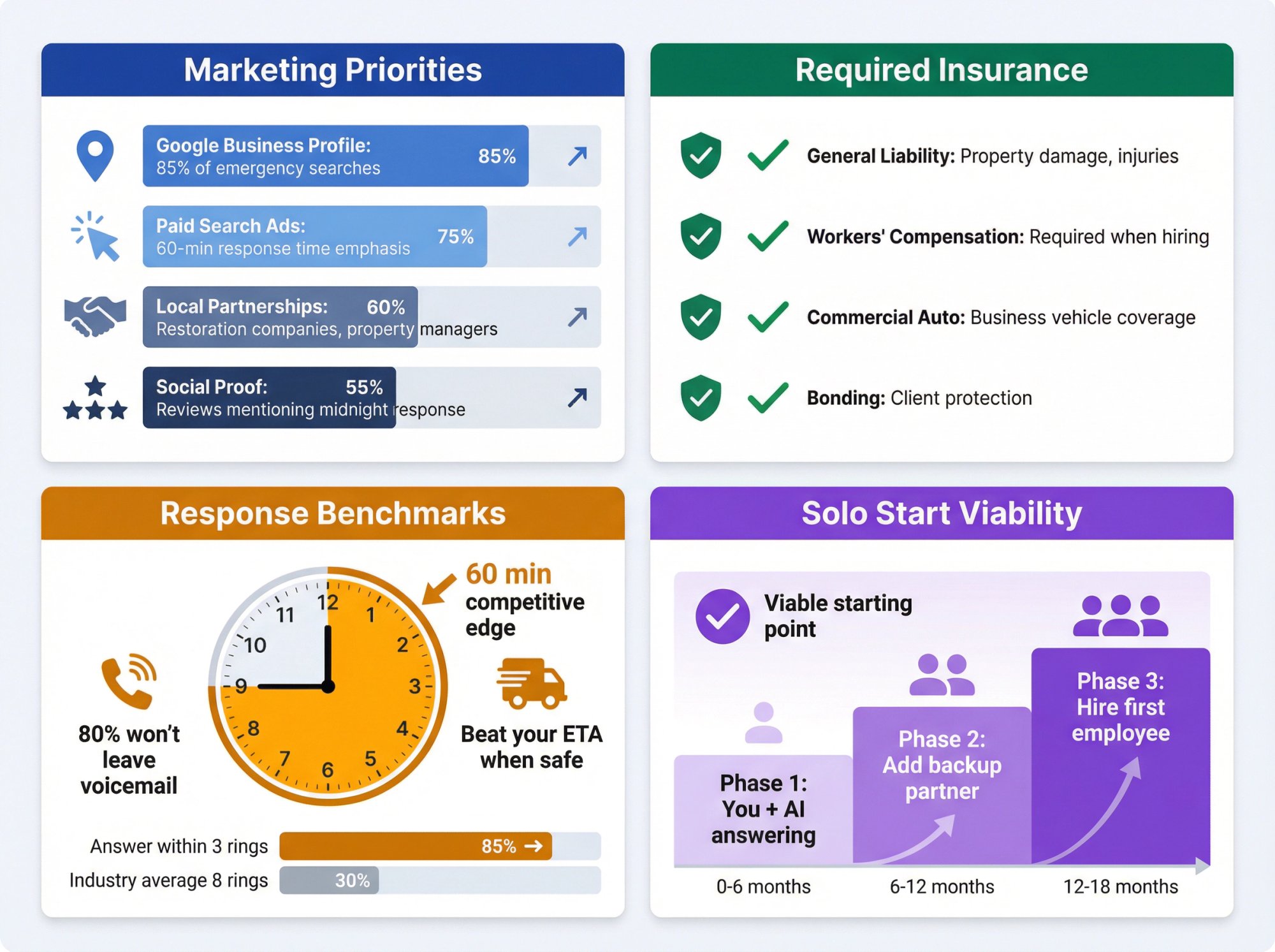
Optimize for emergency searches: Ensure your Google Business Profile shows "Open 24 hours" and includes keywords like "emergency plumber" and "24/7 service."
Run targeted ads: Google Ads targeting "emergency plumber [city]" and "24/7 plumber near me" put you at the top of search results when disasters strike.
Build partnerships: Network with restoration companies, property managers, and landlords who regularly need emergency plumbing.
Emphasize availability everywhere: Put "Available 24/7" on your truck, business cards, website header, and all marketing materials.
Collect and share social proof: Reviews mentioning "answered at midnight" or "showed up within an hour on Sunday" prove you deliver on your promises.
What Insurance Do I Need for an After-Hours Plumbing Business?#
At minimum, you need:
→ General liability insurance: Covers accidental property damage or injuries on jobs. This is often the first thing clients ask for, especially commercial accounts.
→ Workers' compensation: Required by law in most states if you have employees. Covers medical expenses if someone gets hurt on the job.
→ Commercial auto insurance: Your personal auto policy likely won't cover business use of your vehicle.
→ Bonding: May be required in your area or requested by certain clients.
Emergency plumbing involves high-stakes situations (flooding, gas leaks, safety hazards), so proper insurance protects both your finances and reputation.
How Quickly Should I Respond to Emergency Calls?#
Industry best practice is arriving within 60 to 90 minutes for true emergencies. Some plumbers advertise "60-minute response" as a competitive advantage.
The first critical response is answering the phone immediately. Research shows 80% of callers won't leave voicemail, so every unanswered call likely goes to a competitor.
Answer (or have technology answer) on the first few rings. Give the caller a realistic ETA based on your current location and availability. Then beat that ETA if safely possible.
The business that answers first and arrives promptly usually gets the work.
Can I Start an After-Hours Plumbing Service as a Solo Operation?#
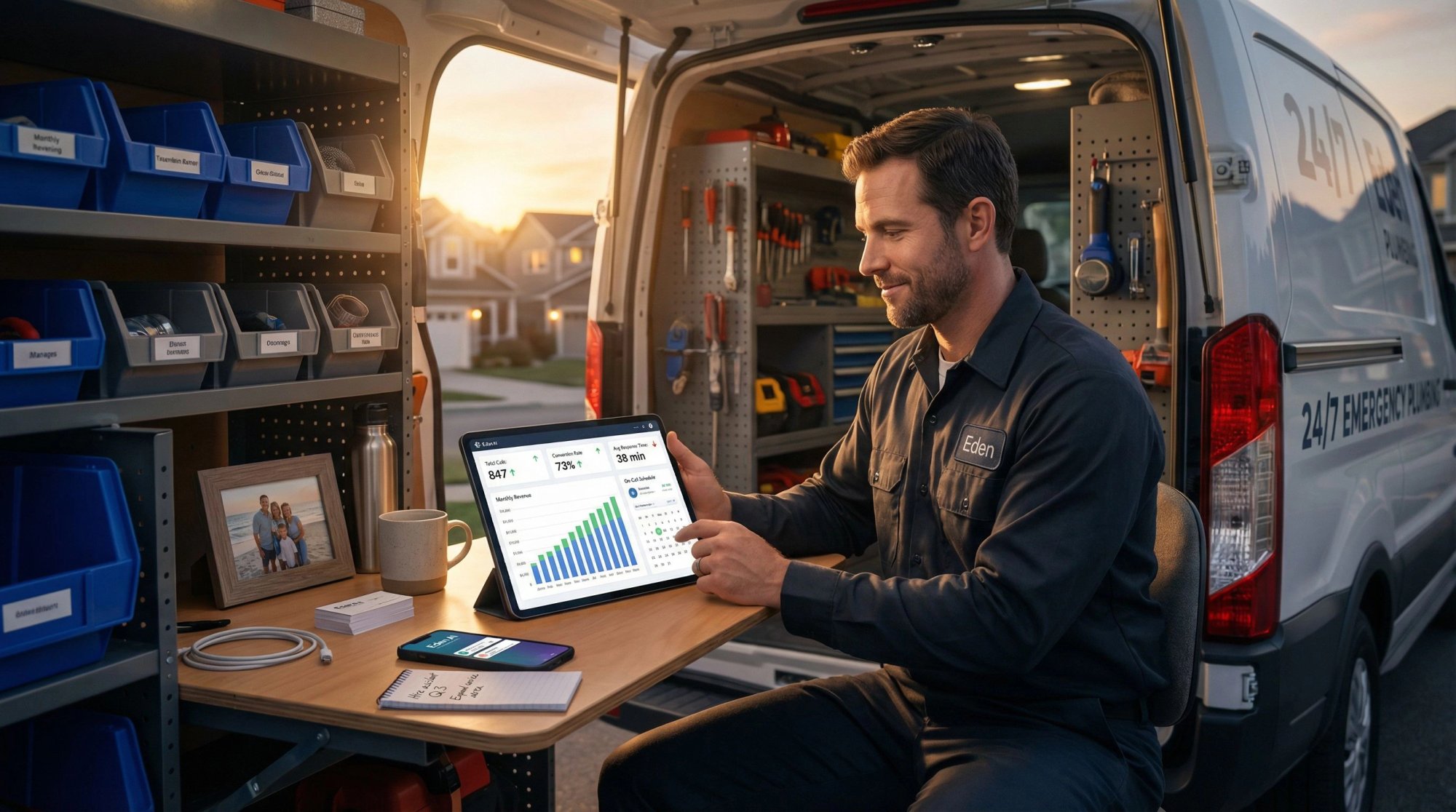
Absolutely. Many successful after-hours plumbing businesses start with one licensed plumber taking all the calls.
Keys to making it work solo:
Use technology: AI call answering ensures you never miss calls even when you're on another job or need sleep.
Set realistic boundaries: You might handle all calls initially, but plan for how you'll scale. Partner with another plumber for mutual backup coverage.
Price appropriately: Your solo rates should reflect the premium nature of 24/7 availability and compensate for the demanding schedule.
Plan for growth: As call volume increases, reinvest profits into hiring help. Operating solo long-term leads to burnout.
Starting solo is common and viable. Just build systems from day one that can scale as you grow.
Ready to Transform YourCustomer Experience?
Join hundreds of businesses using Eden AI to handle calls, book appointments, and provide 24/7 customer support.